Original movies are back!
If you’re anything like me, you’ve been hearing that a lot this year. Phenomena such as Obsession were filling headlines and breaking records, and there seems to be a buzz around theatres again. And that begs the question: Are original movies back?
I remain a bit skeptical on that front. As of Aug. 19, only four of the top-twenty highest-grossing movies of the year have been original, with none breaking the top five of the year. Obsession currently sits at seventh, the highest-grossing movie not linked to any existing intellectual property or adapted from another medium.
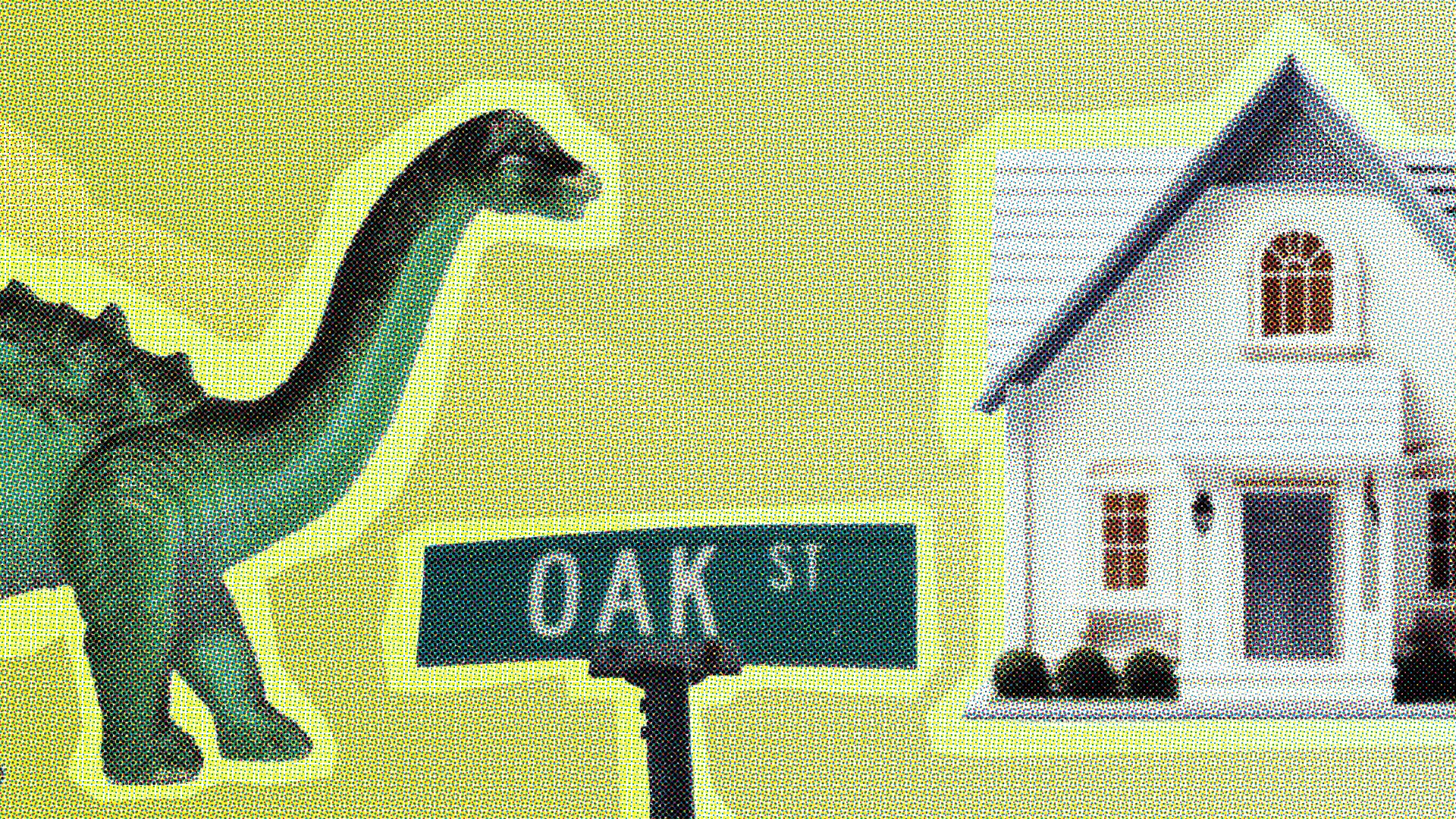
That brings me to The End of Oak Street. Outside of the Jurassic Park franchise (or World, ew), we don’t get a lot of big-budget dinosaur movies, so to get one at all, let alone one that’s good, feels like a miracle.
That isn’t the only unique thing about this movie compared to its contemporaries, either.
Set in the good ol’ days of 1982, The End of Oak Street sets up an idyllic suburban life ripe for the teardown. Behind the freshly painted white fences and neighbourhood barbecues lies a rot. Behind the chic white vinyl veneer lie crumbling family units and a bubbling violence. Parents hide their arguments behind feigned smiles, roving bicycle gangs roam the streets looking for prey, and neighbours threaten to shoot pets over petty squabbles.
The dinosaurs serve only to bring these tensions to the surface. It doesn’t really matter how they get there; what does matter is that they shatter the pretense of normalcy and allow issues to finally come to the forefront of these characters’ lives.
Something notable about the neighbourhood’s reaction to being sent back in time a hundred million years is how uncollaborative the community is. The atmosphere of the opening party vanishes entirely, and households become competing teams. Anne Hathaway’s Denise makes the competition clear when she says that there will be families who die and families who survive. The idea of coming together to overcome these obstacles doesn’t seem to cross anyone’s mind.
This speaks to the highly individualistic ideology surrounding the 1980s, emblematic of the shift that came with the election of Ronald Reagan. Everything, from the false promise of suburbia and the failing nuclear family to the breakdown of social order in a state of emergency. It’s interesting to see a movie revisit this period in a way that celebrates the filmmaking of someone like the Spielberg of the 80s, while also being critical of the social and political landscape of the time.
The only failure of the movie worth pointing out is how the movie resolves Anne Hathaway’s character.
Denise, the stay-at-home mother of the family, is an aspiring writer who feels trapped by her suburban life. Her husband, Greg (Ewan McGregor), consistently avoids talking about the central issues of their relationship and hides important information from her so she won’t worry. Greg’s toxic positivity and need to sweep things under the rug are a huge pain point for Denise, whose manuscripts center on women escaping their constricting lives at home. Ultimately, Denise is the correct one in this circumstance, with her attempts at genuine conversation being brushed off.
The finale of the film, through time-travel shenanigans, has Denise and the kids reunite with Greg before the main events of the film, where a confused Greg is comforted by Denise, who says she will never leave and will work to make the family whole again. It’s a feel-good ending, but ultimately has the woman of the household changing and conforming her life to her male partner, without growing (due to the aforementioned time-travel shenanigans).
Denise still gets a somewhat happy ending, with her becoming a successful author of books based on her experiences with dinosaurs, implying that she is now the breadwinner. But it still feels strange to have her be the one facing the huge character change when most of the tension of the relationship came from Greg.
Ultimately, it’s a good movie, and I really liked it. I encourage you to see it.
Not only is it an original movie that can stand on its own and is a blast from start to finish, but I also selfishly want more dinosaur movies.
The End of Oak Street opened to $21 million domestically, and is now sitting just short of $60 million worldwide as of August 19th, 2026. This goes against its $80 million estimated budget, leaving room until it reaches proper profitability.
I want this movie to succeed, and I want more movies like it to succeed. Not strictly in the dinosaur or 80s aesthetic sense, but in these mid-to-high-budget movies that take a real swing at something. I’m afraid that if this movie doesn’t find success, it will stall the growing trend we’ve been seeing outside of horror, and I don’t know how much more franchise slop I can stomach.
Please go see The End of Oak Street, because even if you aren’t doing it to ‘save cinema,’ you’ll at least have a great time.