Before the ICE district plotted bars across the streets of Edmonton, it was a warehouse district. Bottles of booze flowed through the railroad tracks, and the nearby Jasper Avenue retail shops needed somewhere to keep their goods.
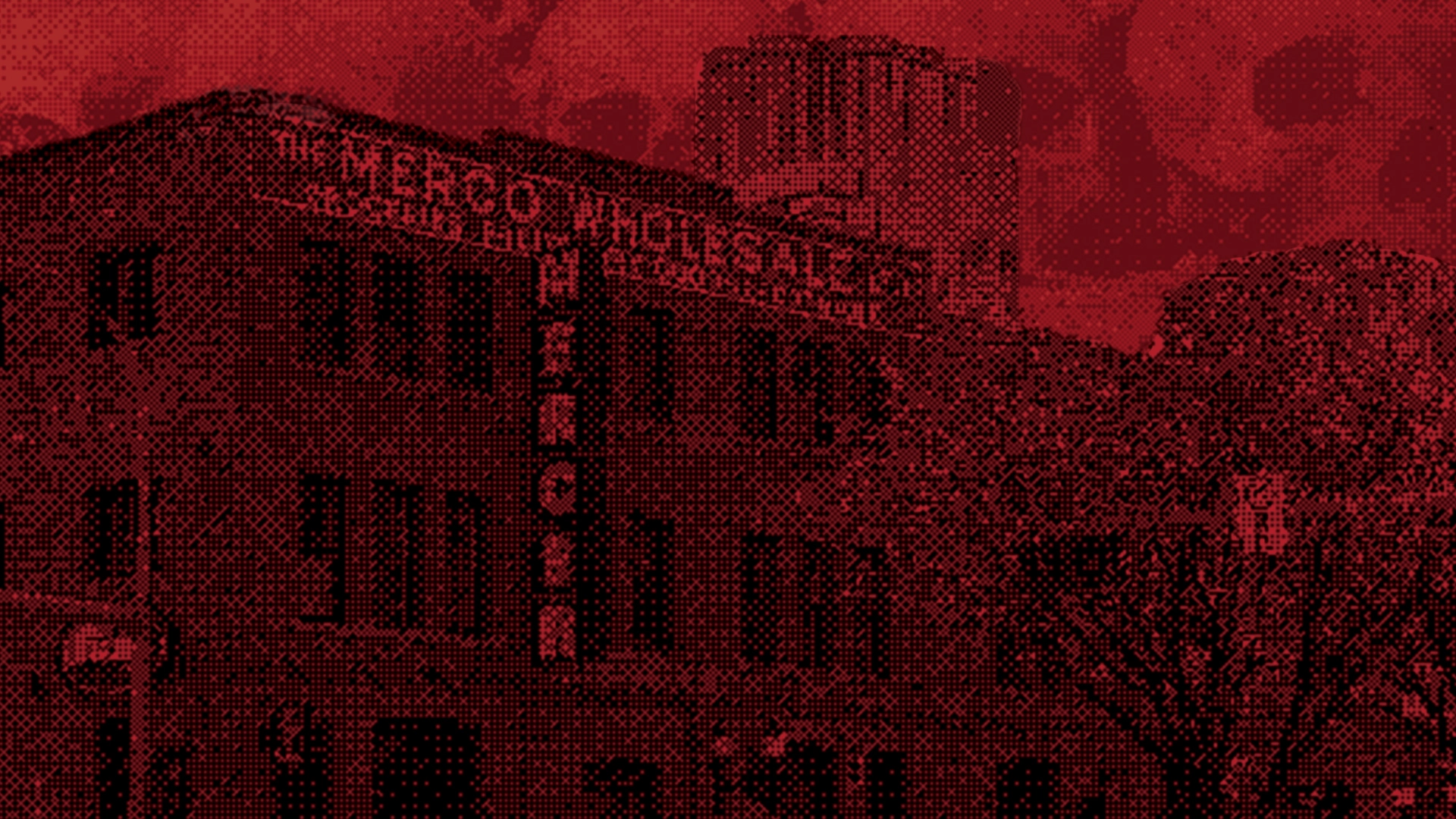
The Mercer building was built in 1911 to store imported liquor and tobacco. In 2026, liquor is still stored here, though in taps and glasses instead of just kegs. The building has hosted many businesses, but is most currently home to the Druid, among others.
The Irish pub is able to operate out of the Mercer building because of Edmonton’s heritage places program, which protects historic buildings and encourages businesses to rehabilitate them. Drunken lads and office workers, sometimes overlapping, reanimate the corpses of these ancient buildings. Crumbling clay-brick structures, illuminated by the neon lights of an older world, are kept alive by the many consumers and workers who fill them.
But old closets are usually stuffed with skeletons that most people choose to ignore.
Catacombs – navigating heritage sites
Jade Charlery-Vidmar is one of the many MacEwan students that socializes over some cold ones after class. She’s a fifth-year design student, an executive member of the Design Students’ Organization (DSO) at MacEwan, and a member of Edmonton Transit Riders, an advocacy group focused on making public transit more accessible. Public transit gets Jade to campus, and her wheelchair gets her around campus.
Her limited mobility means that Edmonton’s heritage buildings are often hard to access.
Charlery-Vidmar explains that she often visits the Dominion building on Whyte Avenue, one of Edmonton’s heritage buildings and the home of Yelo’d Ice Cream and the Woodrack Cafe. The front entrance to Yelo’d is barricaded by a small staircase, and a ramp is accessible in the back alley.
“Typically, if I’m going with friends to get ice cream there, they’ll go around the front, and then I’ll have a friend who volunteers to walk around with me and help me with the doors,” she explains.
In order to use this back-door entrance, Charlery-Vidmar needs to roll through an often muddy or snowy back alley, haul herself up a steep incline ramp, and wait as her friends open the heavy-duty fire door with no automatic opening mechanism.
Charlery-Vidmar lists a similar issue with the Druid. She just recently discovered that the Druid has an accessible entrance in the back, but it isn’t listed on Google Maps.
According to Madi Macnair, the business development coordinator for The Druid and On The Rocks, the front entrance shouldn’t “limit customers with accessibility needs from entering the Mercer Warehouse.”
The pub is also all on one floor, with fully accessible private areas for reservations. The only exception is the stage near the back corner, which has a single step.
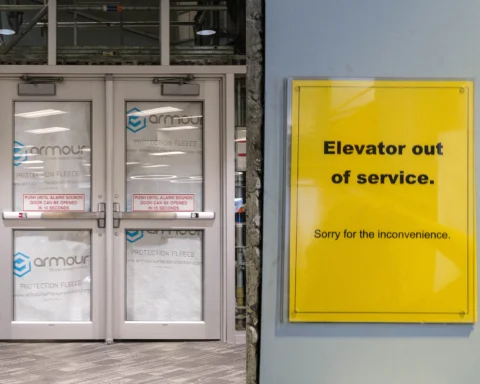
“We have a back entrance equipped with a ramp, and an elevator for access to all floors and businesses in the building.”
While this entrance is possible for Charlery-Vidmar to use, it comes with barriers. She has to use a separate entrance from everyone else.
“It’s unexpected for a wheelchair user or a disabled person to go into a bar,” Charlery-Vidmar explains.
“It’s like things that have been historically stigmatized for disabled people, where it’s like the expectation that disabled people don’t do anything; they stay home.”
— Jade Charlery-Vidmar, MacEwan student
Sextons – maintaining the buildings
David Johnston, principal heritage planner for the City of Edmonton’s urban strategies/planning and environment services, explains that heritage buildings often face the issue of having accessible entrances separate from the front entrances.
“This is typically the result of how the historic building was originally constructed more than anything else – bear in mind that considerations like accessibility were not a major consideration in the past, and such requirements have only found their way into Building Codes more recently.”
He says that many of the main floors and basements for these buildings aren’t level with the street and have stairs immediately as you enter them. The design choice allowed for basement levels to have larger windows to provide more natural light, and it reduced excavation costs during construction.
“As a result, having accessibility from the front sidewalk into the upper and lower levels of the building can prove to be challenging, and could result in significant (and costly) alterations needed to accommodate an elevator or some sort of ramp,” he explains.
The cheaper alternative is to build back-door entrances, often in parking areas. It also means that the exterior is modified rather than the interior, which reduces costs and makes construction easier in a larger space.
Cost is a major factor, as it’s primarily the building owner’s responsibility, according to Johnston. The City of Edmonton’s heritage zones program only provides grants for “eligible heritage preservation work.” Any funding related to accessibility work comes from the provincial and federal governments.
“People needing that accessible entrance can feel relegated to having to use the back door or service entrance, which is unfortunate.”
Gravediggers – cutting curbs
The many layers of weathered paint and drywall that mummify the beautiful crumbling, red bricks preserve the stories of downtown Edmonton. Also kept within those great, old monuments of our city, is an even older way of othering people: inaccessibility.
Inaccessibility has repeatedly been struck down by laws and activist movements, and the modern era has many more considerations for people who wander in different ways, but ancient ruins like the Mercer warehouse display an old approach to architectural design that wasn’t so considerate.
In the early 1900s, when the Mercer warehouse and other now-heritage sites were being developed, Alberta had an interest in eugenics. John MacEachran, the University of Alberta’s provost in 1911, was also the chairman of the eugenics board of Alberta. This board would later pass the Sexual Sterilization Act in 1928, which allowed forced sterilization of people who were deemed ‘mentally deficient’. The act was defended on the basis that eugenics would enhance the genetic quality of Alberta’s population.
Of course, Edmonton isn’t preserving heritage sites because it believes in eugenics. The sites are preserved for their history, character and beauty. But the same philosophy of eugenics is preserved by the long staircases and collective conclusion that disabled people don’t want to go to bars.
To move forward, we all need to consider accessibility more carefully. We all benefit from it.
“If you do a curb-cut for a wheelchair user, it’ll benefit people with strollers. It’ll benefit elderly people. It just removes a point of friction,” says Charlery-Vidmar.
When infrastructure is made more accessible for some people, it often improves for everyone.
“I would say removing barriers to access is the most important thing to do for a disabled person.”
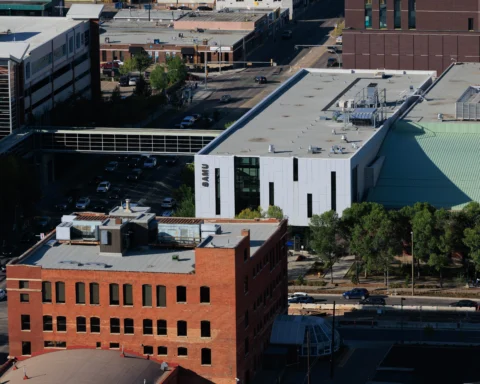
The biggest way to remove barriers is to allow independence for people with disabilities. Sensors to open doorways, like the ones at the entrances of the SAMU building, would allow Charlery-Vidmar to get ice cream without having to ask someone to open the back door for her. Those same door sensors can be used by people with contamination anxiety who avoid possible contact with germs, or even just an office worker carrying a tray of coffees back to their office.
“As for me, I want as much independence as possible,” she says.
“To retain my sense of independence is really an important boost for my self-esteem and just how I feel as a person.”