
For many MacEwan students, SAMU is associated with Fall Fest, Breakfast Club, free campus events, or that one building that sits between Buildings 7 and 9. Despite every student paying mandatory fees toward the students’ association each semester, many may not know what SAMU is, what responsibilities it has, or how it fits into university life.
The Students’ Association of MacEwan University is an independent, not-for-profit organization that provides programs and services for students outside of the classroom. Governed by elected student representatives and supported by professional staff, SAMU oversees student advocacy, health and wellness initiatives, affordability programs, and campus life programming at MacEwan University.
Students’ associations at public post-secondary institutions are mandated under the Alberta Post-Secondary Learning Act.
What is SAMU?
Every fee-paying MacEwan student enrolled in an undergraduate credit course is automatically a member of SAMU.
Although it works closely with MacEwan University, SAMU operates independently from the institution. It is governed independently by elected students rather than university administration, operated by a mix of part-time and full-time staff, and is funded primarily by mandatory students’ association fees.
According to the organization’s strategic plan, SAMU’s mission is to “build a positive student experience” by creating opportunities for students to connect with one another, advocating on their behalf, and providing services to complement their education.
Unlike the university, which oversees academic programs and institutional operations, SAMU is responsible for a range of non-academic services and programming. These include student advocacy efforts, student groups, health and dental plan administration, wellness initiatives, volunteer opportunities, events, and the Griff.
The 2021-2026 strategic plan outlines four organizational priorities: campus life and student engagement, student representation, student support services, and the organization’s long-term governance and financial sustainability.
Who runs SAMU?
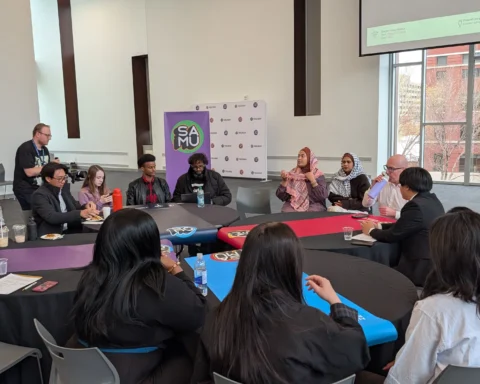
SAMU is governed through two bodies: the executive committee and the students’ council. Executive committee elections are held every March, and students’ council members are elected in October.
The executive committee consists of five students elected annually to serve one-year terms. Each executive is responsible for a specific portfolio, including governance and finance, academic affairs, external affairs, and student life. Together, the committee oversees the day-to-day governance of the students’ association, represents students in meetings with the university and external organizations, and carries out the policies approved by the students’ council.
Students’ council serves as SAMU’s highest governing body. Councillors debate and approve policies, oversee SAMU’s annual budget and governance decisions, and hold the executive committee accountable on behalf of the student body. Both the executive committee and students’ council representatives are elected annually by MacEwan students, giving the student body direct oversight of the organization’s governance priorities.
Together, these bodies make decisions about how SAMU is governed, how student fees are allocated, and which organizational priorities are pursued by SAMU and the executive committee.
Advocacy
As a students’ association, SAMU represents the collective interests of MacEwan students to the university, and to the municipal, provincial, and federal governments. Much of that work is carried out by members of the executive committee, who meet with university administrators, elected officials, and other post-secondary organizations to raise issues affecting students.
Advocacy focuses on broader issues that affect the student population, including tuition and affordability, student financial aid, mental health supports, academic policies and access to post-secondary education. In addition to external advocacy, student representatives also sit on a variety of MacEwan University and SAMU committees, where they provide perspective on institutional governance and academic matters.
SAMU also gathers feedback from students through surveys, consultations, and direct engagement throughout the year, using that information to guide its advocacy priorities and represent student concerns in discussions with these various decision-makers.
Campus life
In addition to its governance responsibilities, SAMU organizes campus programming throughout the academic year. Events like Fall Fest, Winterfest, Battle of the Bands, and other activities are intended to provide social opportunities for students outside of their classes.
SAMU also hires students in a variety of part-time positions and coordinates volunteer opportunities through many of its events and programs.
Student groups
Student groups are student-led organizations centred around shared academic, professional, cultural, recreational, or social interests. Students can join an existing group or apply to create a new one through SAMU, which oversees the group recognition process and provides administrative support for registered groups.
SAMU also provides resources intended to help student groups operate throughout the academic year. Registered groups have access to meeting and event space, training for student leaders, and operational and administrative resources. They may also apply for funding through SAMU to support events and initiatives throughout the academic year.
Student Groups Connect serves as an online platform for managing memberships, events, and communication within groups.
Student supports
While events and student groups are among SAMU’s most visible activities, the organization also administers a wide range of student support services throughout the academic year. These services address a variety of student needs, including: academic advocacy, food security, health coverage, wellness programming, and financial assistance.
One of SAMU’s support services is the Student Advocacy Centre, which assists students with both academic and non-academic issues at the university. The centre provides confidential support by helping students understand university policies, prepare for meetings and hearings, review correspondence, and attend meetings as a support person. Advocates do not make decisions or speak on behalf of students, but instead help them to navigate university processes.
The Advocacy Centre is also identified by MacEwan’s Academic Integrity Office as a resource for students facing allegations of academic misconduct before meeting with instructors or requesting a review hearing.
Another major service administered by SAMU is the student health and dental plan. Eligible students are automatically enrolled in the plan, which provides coverage for prescription medications, dental and vision care, mental health services, and other expenses not covered by provincial health insurance. Students may also opt out if they have alternative coverage or purchase coverage for eligible dependents.
SAMU also administers several food security initiatives. Through The Pantry, eligible students can receive hampers containing around 10 to 12 days’ worth of non-perishable food and hygiene products up to twice each month. According to vice-president (governance & finance) Nathan R. Poon, the program distributed 1,832 hampers during the fiscal year. Beyond The Pantry, SAMU also operates the weekly Breakfast Club, provides fresh produce through its Farmers’ Market program, and offers peer support services through the Support Hub in the SAMU building.
SAMU building
Completed in 2020, the SAMU building is the physical home of the students’ association.
The building houses staff offices, the executive committee and students’ council chambers, the student benefits office, peer support services, The Pantry, and vendor spaces. It also includes common spaces that are open to students throughout the academic year.
Executive committee and students’ council meetings are held on the third floor of the building in the students’ council chambers, where elected representatives debate and vote on matters relating to the organization.
Where does the Griff fit in?
Among the many services supported by SAMU is the Griff, MacEwan University’s student publication. We report on campus news, student governance, university affairs, and issues affecting the MacEwan community. The Griff also covers arts, culture, sports, and life in Edmonton’s downtown core. We publish seven print issues during the academic year, alongside regular online coverage on our website and social media.
Although we receive funding through student fees as a part of SAMU, editorial decisions are made independently by our team of 10 editorial staff. That independence allows us the freedom to report on SAMU, MacEwan, and other issues affecting our community without any editorial oversight from the students’ association.
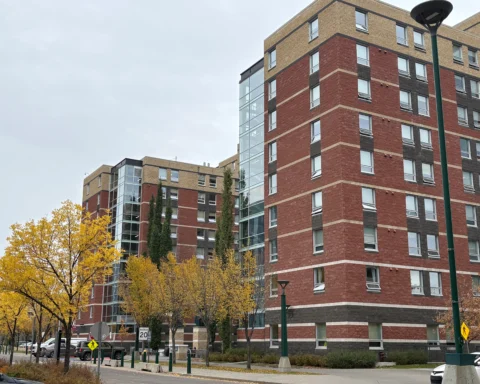
We host weekly meetings every Tuesday at 5 p.m. in our office, located in The Dorchester, directly south of the SAMU building. Everyone is welcome to attend, pitch ideas, or pick up a story.
Whether students are looking for support, hoping to get involved, or simply curious about where their student fees go, SAMU touches nearly every aspect of student life beyond the classroom. As every fee-paying student is a member of the organization, understanding how it operates is the first step toward making informed decisions about the services they access, the elections they vote in, and the issues that shape life at MacEwan.