Everyone wants to be different, but somehow we’ve ended up being different in the same ways. Social media and algorithms have made finding individuality more accessible than ever, but that individuality is being sold to us in a copy-and-paste package. When users see the same inspiration boards, aesthetics, and trends, the line between personal identity and algorithmic influence becomes blurred.
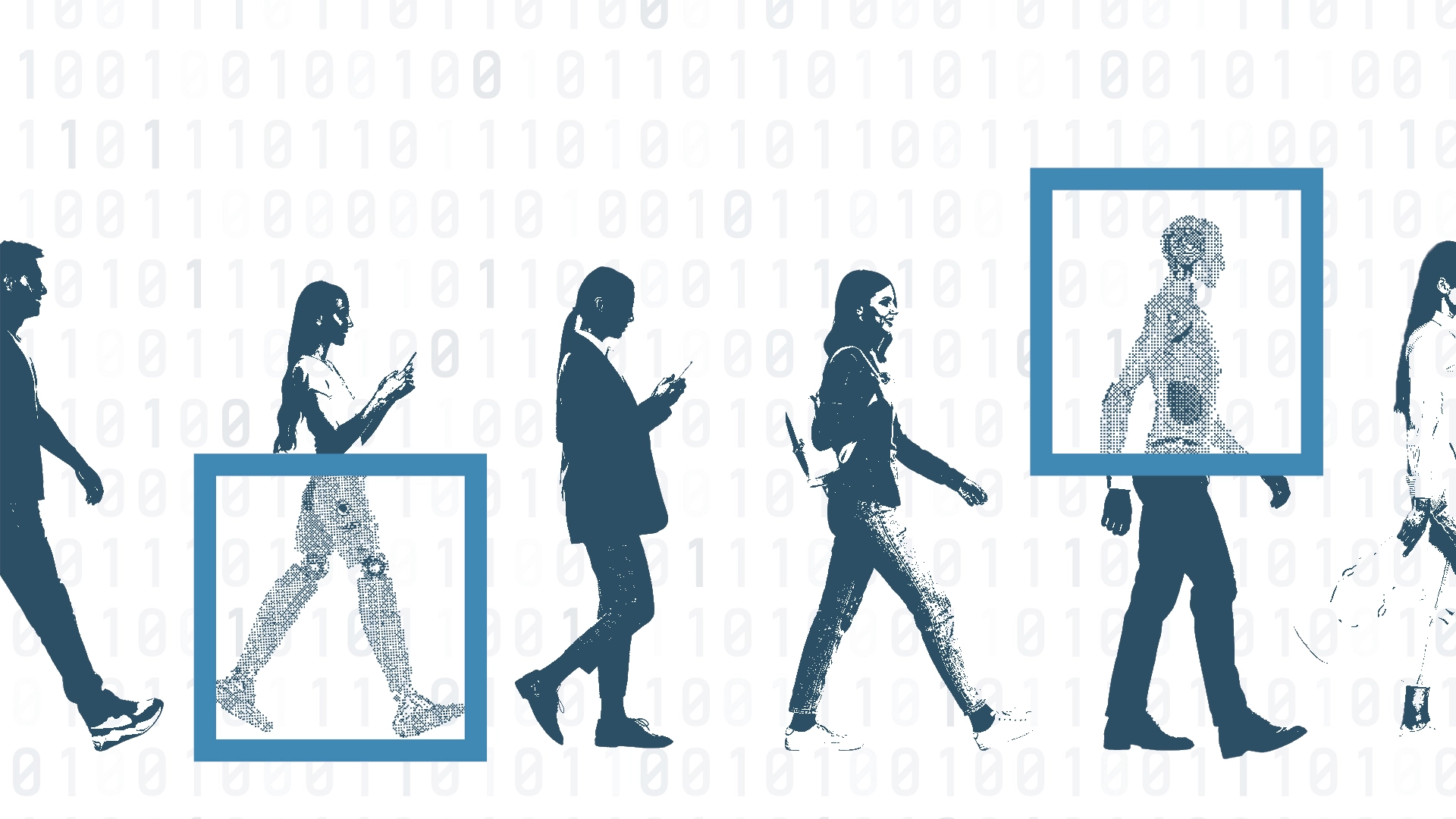
An algorithm teaches us what to like, rather than just showing us. TikTok, Instagram, and Pinterest use similar recommender systems that entice us to keep consuming by feeding us new ideas, trends, and styles to try out and label as our own.
TikTok’s recommender system is quite simple. If User A and User B both like videos one, two, and three, and User A decides they like video four, TikTok will assume that User B will too. The platform weaves new ideas into each user’s feed in hopes of broadening their interests, which are then replicated and shared with other users with similar tastes.
Then, user interactions with videos are taken into account. The first videos to appear after searching for something on TikTok will be the videos with the most interactions and engagement.
This system encourages users to “discover” new trends and styles, which keeps them on the app. However, when we are all being fed the same videos, hashtags, and creators, things begin to feel like our own personal taste because of repeated exposure. If an algorithm was the first one to introduce a new style, is it really part of your personal taste, or is it just a construction of an algorithm? Are our identities reflected by our feeds, or created by them?
I don’t remember when I started thinking Owalas — the minimalist water bottles with sip spouts — were cute. All I know is that I started seeing them online, I bought one, and now I sit in lectures and look around at tens of other students who also did.
Despite this, I’m not upset I bought an Owala. Trends aren’t inherently bad. How we shape our identity has always been influenced by other people.
Before algorithms and social media, we discovered our tastes through magazines, celebrities, television, and word of mouth. Discovering new interests through other people is not a new concept. We are imitative creatures. However, the scale and personalization of what we consume are new struggles.
The internet lets us experiment with our identities more than ever before. This is a good thing. The freedom to express ourselves in endless ways with endless possibilities is freeing. Yet, when that experimentation occurs within a system designed to keep us consuming, we face an artificial sense of self.
At some point, there was a shift on social media from influence to commercialization. “I like this style” became “if I don’t buy these four products, I cannot consider myself to have adopted this style.” The shift was intentional. The rise of brand deals and overconsumption has led to a world where social media tries to get us to experiment with new styles to squeeze more money out of our pockets. If you don’t own these ballet flats, are you really a coquette? If you don’t have this hair gel, how are you doing your clean girl slickbacks? The expense of a style is exhausting, and yet we keep participating.
These hyperspecific labels have led to ‘microtrends,’ which are fleeting trends that gain online popularity incredibly quickly and lose it just as fast.
When we are mass adopting a new trend every other week, identity begins to feel temporary. We end up with fashion pieces that we can pinpoint to a specific month or year, and we never wear them again. That grommet belt hanging in your closet hasn’t been worn in years. Have you put on a pair of high-waisted pants in the last six months? Where are your Labubus now?
It feels like we never have any time to commit to a stable sense of self, because our wardrobes, music tastes, and interests are constantly being cycled out. We are always talking about ‘nostalgia’ from less than five years ago because we have sped through what feels like a million new trends and styles since then.
There is value in the fact that the internet lets people find subcultures and communities they wouldn’t otherwise find. I am eternally grateful to have discovered an online community with the same interests as mine that has kept me afloat for years. It feels like an escape to be able to hop online and talk about my interests with a bunch of people that I don’t really know, that nobody in my real-world circle knows anything about.
Unfortunately, when subcultures and ‘niche’ communities gain mainstream traction, the culture is packaged and replicated into an artificial form. Alternative fashion has always been a very real subculture, yet when the internet caught on to the idea of being alternative, it took off. We then ended up with ‘e-girls’: people calling themselves alternative but choosing to buy all their clothes from fast-fashion websites, and taking the style at face value without considering how it came to be. When we are all constantly cycling through the same trends, everyone becomes fixated on being niche and underground, which destroys what once was.
I still believe that the internet has given us a newfound advantage in contemplating our sense of self. The human condition is continually discovering who we are. When we stop contemplating ourselves, we stop becoming human. Humans are imitative creatures, and nobody ever has a completely solid foundation of who they are, and that’s completely natural.
When influencers place themselves in a hyper-specific box for the sake of their content, they limit their own humanity. There are consistently creators online who attract a following because they dress and present themselves a certain way, so they never experiment with their style for fear of losing their platform. They are no longer thinking about who they are, but rather about how they can perform.
This is then reflected on consumers, making us all less true to ourselves. Nobody is reaching to discover who they are; they’re simply trying to find a box to place themselves in, which is making us less genuine. Less authentic.
My taste in music will probably continue to fluctuate as I discover new artists online. My opinion on baggy, bootcut, and skinny jeans will probably change again. I’m going to keep flaunting that Owala, and that’s okay! Trends are inevitable, and we are too far in ever to escape them. As long as we are aware of the extent to which we are being fed a narrative, we will maintain our individuality. As soon as we start searching “my style,” “my makeup,” and “me as a character” on TikTok to see how well our algorithm can predict us and post that as content, we slip into algorithmically constructed versions of ourselves.