Beginning Aug. 1 2026, Alberta post-secondary students could be expected to cover more of their education costs themselves, or rely more heavily on their parents and partners.
For the 2026-27 loan year, Alberta Student Aid has doubled its minimum student contribution from $1,500 to $3,000 and reinstated expected parental and spousal contributions when calculating a student’s available financial resources.
Contributions are the amount of money students, their families, or their spouses are expected to put toward the cost of education and living before student aid is calculated. These amounts are subtracted from the total education costs used to determine financial need.
Under the new rules, parental contributions for dependent students are calculated based on family income, family size, and the number of dependents attending post-secondary. Married and common-law students can also have an expected contribution from their spouse or partner included in their assessment.
The calculations can reduce a student’s assessed financial need – and therefore the amount of aid they receive – regardless of whether the expected funds are actually available to them.
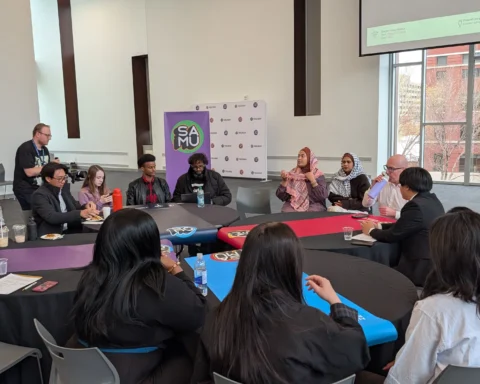
SAMU president Nathan Poon said the organization is concerned the changes could create additional financial barriers for students.
“The issue is that they’re just not getting as many loans in the first place now, which is a big issue,” said Poon. “And then, obviously, there’s the financial barrier aspect, which is incredibly concerning as well.”
Poon said the parental and spousal contribution requirements could be especially difficult for students who have strained relationships with their families or partners.
“You know, maybe you have parents who you don’t have a good relationship with, who might not be willing, well, A – to either contribute to your education or, B – willing to disclose the tax information,” said Poon. “It sort of creates like a tug of war situation.”
He said SAMU has already heard from a few students experiencing financial difficulties since the changes took effect and expects those concerns to increase as the school year approaches.
The changes come as some students are already struggling to navigate the student aid system.
MacEwan bachelor of arts student Meghan Wilson applied to Alberta Student Aid after previously receiving Saskatchewan funding. Her application was approved, with funding expected around May 5, but months later, she said she still had not received it.
Wilson said she repeatedly contacted Alberta Student Aid and the National Student Loans Service Centre, receiving different explanations about what was holding up her funding.
“Why am I doing all the calling? Can’t you guys just talk to each other?” Wilson said after being directed between agencies.
As the delay continued, Wilson received notice from MacEwan that she needed to pay her tuition by Aug. 5 or risk being unenrolled from classes she needed to graduate. Without family stepping in to cover the cost, Wilson said she likely would have lost the classes and delayed her graduation.
Wilson said her husband has recently had less work, leaving their household behind on some bills. Even the approximately $1,000 she was expecting from her delayed disbursement could have gone toward expenses like diapers for their daughter or household costs.
In an email statement to the Griff, MacEwan University said it recognizes the financial challenges students can face and tries to offer flexibility through payment plans and other arrangements.
“Financial aid advisors are available to help students understand their funding, navigate changes to their student aid assessment and explore options available to them.”
Poon said students who cannot make up for gaps in their funding may seek other forms of credit, including lines of credit and payday loans, which can carry higher interest rates.
SAMU’s executive committee, alongside other students’ associations and unions, have been consulting with Alberta’s Minister of Advanced Education, Myles McDougall. According to Poon, there is consistent concern across the sector that the changes will create or enhance unnecessary barriers for students.
The association is also pushing for the province to reconsider interest on student loans as another way to reduce financial barriers. While Poon said he hopes the new requirements can be reconsidered this year, executive committee advocacy will also target potential changes in next year’s provincial budget.
Poon also explained how making post-secondary education more difficult to access could have long-term consequences for Alberta’s workforce.
He said students are already balancing school with jobs, food costs, and, in some cases, supporting children, parents, or other family members. Adding another financial barrier could make post-secondary education unfeasible for many students.
“Students are going to drop out because of these changes.”
– SAMU president Nathan Poon.