
Photo by Amanda Erickson
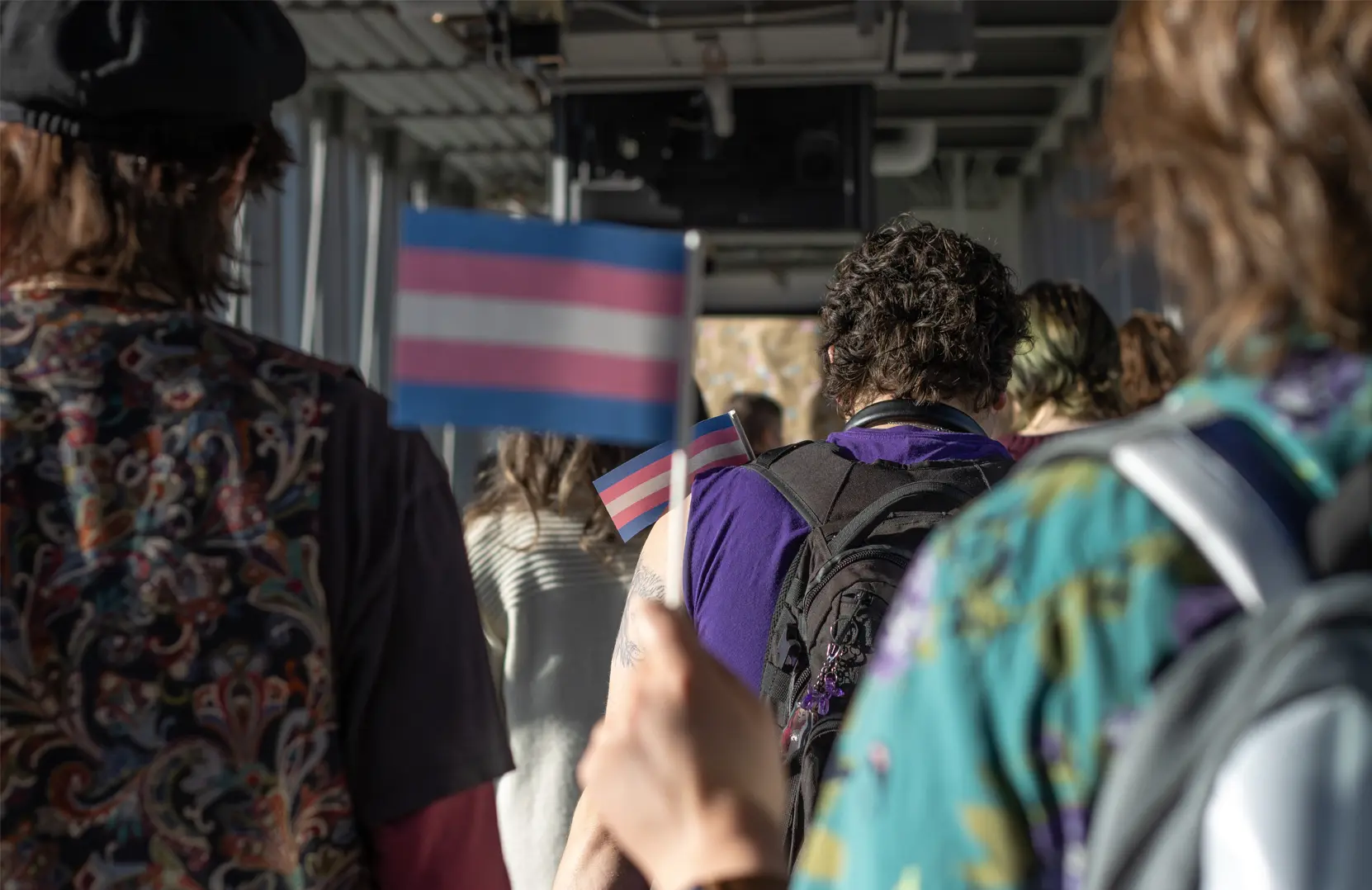
Members of the CSGD queer leadership team organized a march to remember the lives lost this year.
MacEwan University community members gathered on campus on Nov. 20 for Trans Day of Remembrance (TDOR), honouring the lives of trans people lost to violence and reflecting on rising hostility toward 2SLGBTQ+ communities in Alberta.
The event was organized by the MacEwan Centre for Sexual and Gender Diversity (CSGD) and the CSGD queer leadership team. Attendees marched from the Building 7 clocktower to Allard Hall, ending the walk in the CSGD common room with tea and a community discussion. The march happened just days after the provincial government introduced Bill 9, legislation that will implement the notwithstanding clause to restrict gender-affirming care for youth and impose mandatory parental consent if a student wishes to use a different name or pronouns at school. Medical experts across Canada have condemned similar policies elsewhere, calling the Alberta law unconstitutional and warning it may contribute to worsened mental health outcomes, forced outings, and reduced access to care.
For many, the timing of the march created a more charged atmosphere than in previous years. “I feel kicked in the ass by November,” said Jesse Gibb, a student who participated in TDOR. He added that being able to gather as a community mattered.
“It’s really good to remember that no matter how you survived, you still survived, and you’re still an example for those who come next. Those who come after you, the next generation, they can too.”
– Sylvan, a member of the CSGD queer leadership team.
Another attendee, Hartley, described the emotional shock of the week. They said the atmosphere of the day brought up painful questions tied to Bill 9. “It’s just kind of like, a questioning of my own identity,” they said. “This whole entire world seems to think that my identity is something dangerous, and I just can’t help but think, is that true?”
Inside MacEwan, students wrote the names of those who lost their lives this year on a long banner. As they walked, participants carried trans flags that they silently waved through the air.
“Trans Day of Remembrance means to me, taking time to reflect on the violence that is perpetuated against the transgender community on a daily basis, and reflecting on the losses that we’ve seen in the community from said violence throughout the year,” said Sage, a member of the CSGD queer leadership team. They explained that the process of writing the names on the banner was a heavy one, but it provided some catharsis, allowing students to reflect on the losses the community had experienced this year.
Many participants linked this year’s TDOR to the anxiety and fear created by Bill 9.
“I think it’s really important to make sure we’re continually making ourselves visible,” said Sage, adding that visibility remains essential despite risks to the community.
Bill 9 has drawn strong criticism from health professionals, including organizations such as the Canadian Medical Association, which has warned that the government is “not only restricting gender-affirming care, but it is infringing on physicians’ freedom of conscience, undermining their clinical judgement and disregarding the rights of patients to access medically necessary care.” Research published in sources like the Journal of Adolescent Health and the National Library of Medicine cites that gender-affirming care significantly reduces rates of depression, suicidality, and self-harm among trans youth. According to data from the Trevor Project released in Oct. 2025, 61 per cent of trans people lost to suicide were trans youth ages 15-24, which is the age range that includes a large portion of MacEwan students.
Another member of the queer leadership team, Sylvan, highlighted TDOR’s role in addressing both violence and suicidality within the community. “Trans Day of Remembrance isn’t just about the people that have died due to violence against trans folks. It’s not just about the people that are murdered,” they said. “It’s also about the suicides and the mental health aspect.”
They also shared a message to trans youth navigating life under Bill 9. “It’s really good to remember that no matter how you survived, you still survived, and you’re still an example for those who come next, for those who come after you, the next generation, that they can too.”


0 Comments