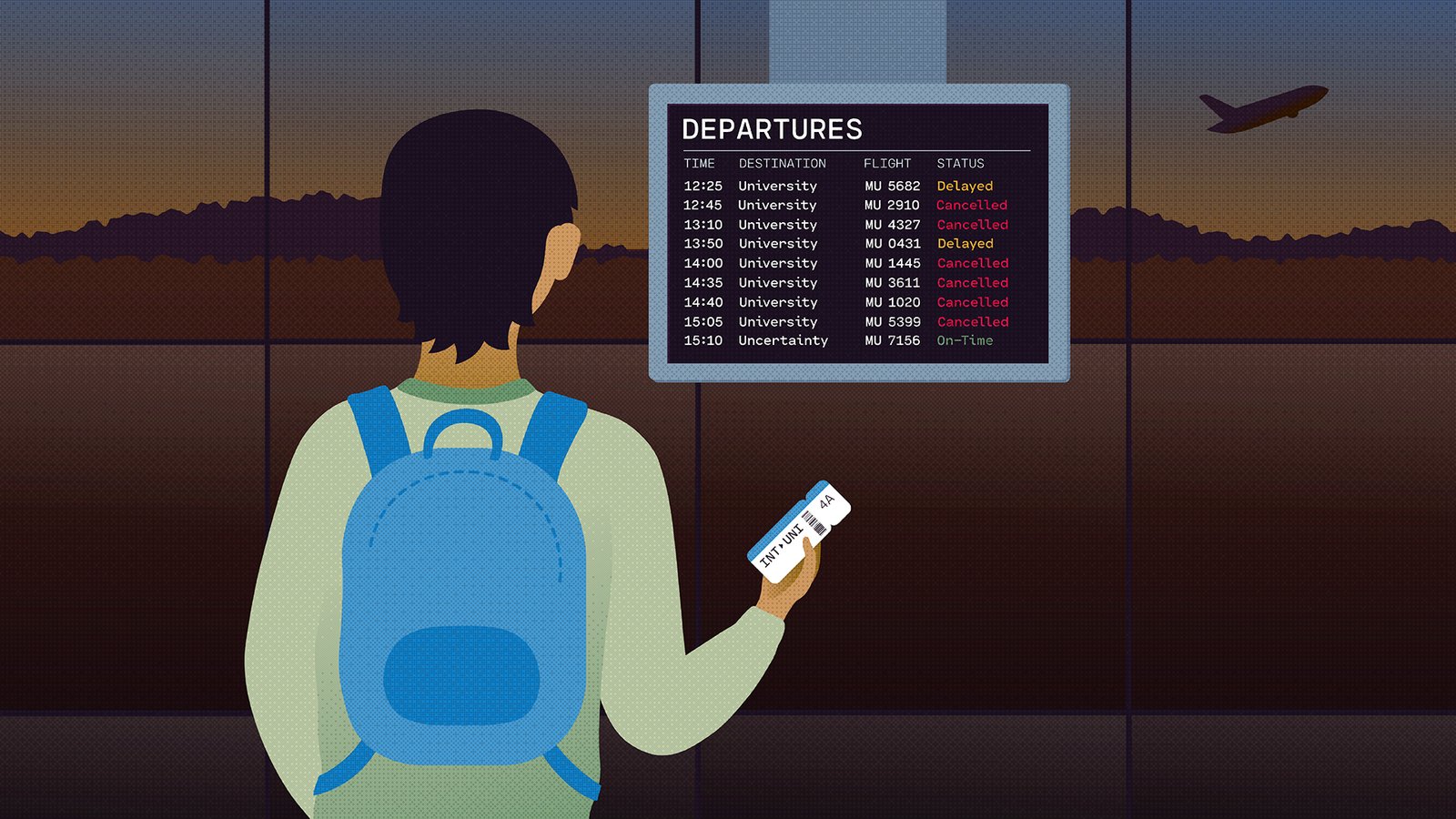
International students across the country are facing uncertainty in their studies this fall as Canada continues to tighten the process for international student applications.
Some prospective MacEwan students have reported through MacEwan Student Life that having their study permit applications delayed or refused ahead of the fall semester has left them to consider whether to defer their admission, reapply, or abandon their plans to study at the university altogether.
Most international students studying in Canada for longer than six months require a study permit issued by Immigration, Refugees and Citizenship Canada (IRCC). Applicants must be accepted by a designated learning institution and demonstrate that they have enough money to cover tuition, living expenses, and transportation, among other requirements.
Undergraduate students coming to Alberta also require a Provincial Attestation Letter (PAL). Post-secondary institutions request the letters on behalf of accepted students, but the federal government ultimately decides whether to approve these applications.
The system has undergone a series of changes since the federal government introduced a cap on international student applications in 2024. IRCC has said the measures are intended to address what it describes as “unsustainable growth” in the international student program, strengthen the system’s integrity, and ensure students have adequate financial and institutional support when they apply.
The number of study permit holders in Canada fell from a little over 928,000 at the end of 2024 to just over 691,000 at the end of 2025, according to IRCC. The refusal rate for new study permit applications also increased to 59 per cent in 2025, compared to 52 per cent in 2024.
Financial requirements have also increased substantially. International students applying outside of Quebec need to demonstrate they have at least $23,448 for one year of living expenses for a single applicant, in addition to tuition and transportation costs.
In July, the IRCC also updated instructions for immigration officers assessing applicants’ finances. Officers are now directed to assess the source of an applicant’s funds in all cases and may seek additional financial and employment documents when assessing whether a student can support themselves throughout their studies.
SAMU president Nathan Poon said SAMU has not heard extensively from students about study permit refusals, but that doesn’t mean students aren’t being affected.
“Our perception and understanding is that the impact on MacEwan students and SAMU members has been minimal to date,” said Poon. “But, of course, it’s very possible that struggling students are falling under the radar.”
– SAMU president Nathan Poon
Poon said SAMU’s ability to assist prospective students is limited because its mandate primarily covers students who are already enrolled at MacEwan. However, he encouraged current students experiencing study permit, permanent residency, or affordability concerns to contact the association.
He also explained how SAMU works with MacEwan International to connect with international students through events, surveys, focus groups, and orientation programming.
Poon said international students can be particularly vulnerable to affordability pressures because they pay significantly higher tuition than domestic students. He added that more than half of the people using SAMU’s food pantry are international students.
“Whether it’s an affordability concern or whether it’s an IRCC or a permanent residency concern, we do want to hear from as many students as possible,” said Poon.
SAMU has previously advocated through the Canadian Alliance of Student Associations (CASA) for fewer barriers facing international students seeking permanent residency or citizenship. SAMU is not currently part of CASA or another dedicated federal advocacy organization, but the students’ council is considering rejoining.
The federal government says schools are responsible for supporting the international students they recruit, while the IRCC is responsible for deciding whether an applicant meets federal study permit requirements.
This uncertainty is also unfolding as Alberta prepares for an Oct. 19 referendum that includes several questions about immigration and temporary residents. Among them, Albertans will be asked whether the province should seek greater control over immigration and whether people with non-permanent immigration status should face different eligibility requirements or costs for some provincially-funded services.
At the same time, the province continues to promote Alberta as a destination for international education, describing the province as home to thousands of international post-secondary students.
In an email statement to the Griff, the provincial government said it “remains committed to attracting talented learners from around the world” while acknowledging the uncertainty created by federal permit decisions.
The province said students affected by a delay or refusal should review information from IRCC and work with their institution to discuss options such as admission deferrals. It also said it would be premature to speculate about how the upcoming referendum could affect international students.
For prospective students who have already secured their admission, receiving an acceptance letter is only one step in the process. Whether they make it into a MacEwan classroom this fall ultimately depends on receiving federal permission to study in Canada.