
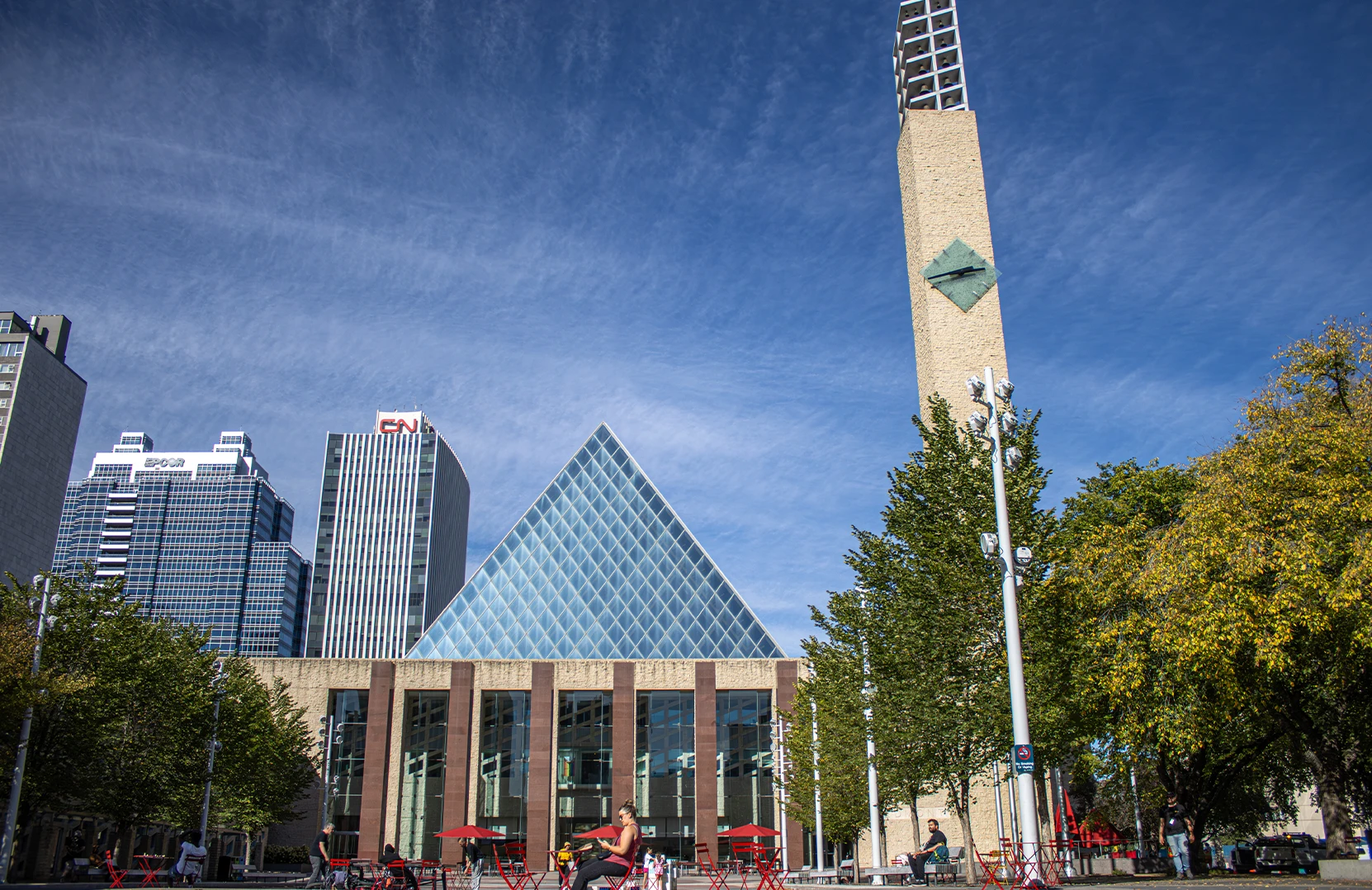
Photo by Amanda Erickson/The Griff
The program gives users free or discounted access to pools, rec centres, golf courses, and more in Edmonton.
City councillor Michael Janz recently put forward a motion to review the Leisure Access Program (LAP) to include post-secondary students. City administration agreed to review the criteria to include low-income, full-time students.
The LAP gives its users free or discounted access to many institutes around the city including recreation centres, pools, golf courses, the zoo, and even the Muttart Conservatory. Currently, full-time students who have access to publicly funded recreation, like MacEwan, do not qualify for the LAP. This excludes students who live off campus, and doesn’t account for the facilities not included on campus. Students with children who are low income are eligible to apply for the LAP.
“If you were low-income for any other reason either than being a post-secondary student, you would qualify. But for some reason, post-secondary students are not included,” said Janz. “It’s based on an outdated model that students have either generous family support or tuition is somehow affordable.”
Some have concerns about the already tight city budget, to which Janz says “I don’t think it’s going to make that much of a difference because many of these folks weren’t necessarily purchasing passes anyways. We have to heat the hot tub whether there’s four people in it or eight people in it.”
Abdul Abbasi, vice-president (external) of the University of Alberta Students’ Union, has confirmed his support for this initiative, in an email claiming both UASU and SAMU support the motion.
“Price, time, and accessibility are often major factors in students not utilising recreation facilities. With rising costs across the board, students are often not able to make purchases outside of the bare necessities like food, rent, and tuition, so engaging in recreation offered amenities is often a distant thought,” says vice-president (external) of SAMU, Wilfrid Youbi Fansi in an email statement. “Students would face fewer hurdles in accessing community facilities and have the chance to focus on mental and physical health outside of campus without the monetary considerations in place.”
Janz emphasized that this will come down to the decision of the city council. “Council agreed that this should be reviewed. It’s going to take part in the review now and it will be coming to the next council in November.” he said. “I hope that students take the municipal election to ask candidates for mayor and city council where they stand on this. Do they support expanding recreation opportunities for students – yes or no?”
Being a student is hard. We have rent, tuition, textbooks, supplies and unimaginable responsibilities unique to us all. On top of this, cost of living has increased exponentially, with inflation rising by 1.9% this August, adding pressure to students as groceries, housing and other essentials continue to rise in price. This creates an environment that is difficult to traverse for students who sometimes may not have experience exploring the city, especially with limited budgets.
Sources at YMCA Canada report that Canadians aged 18-34 average nearly four hours of their day on their phone, many expressing feelings of isolation. This effect is compounded by income inequality, as Canadians earning under $50,000 are far less likely to have frequent social interactions compared to higher earners.

0 Comments