
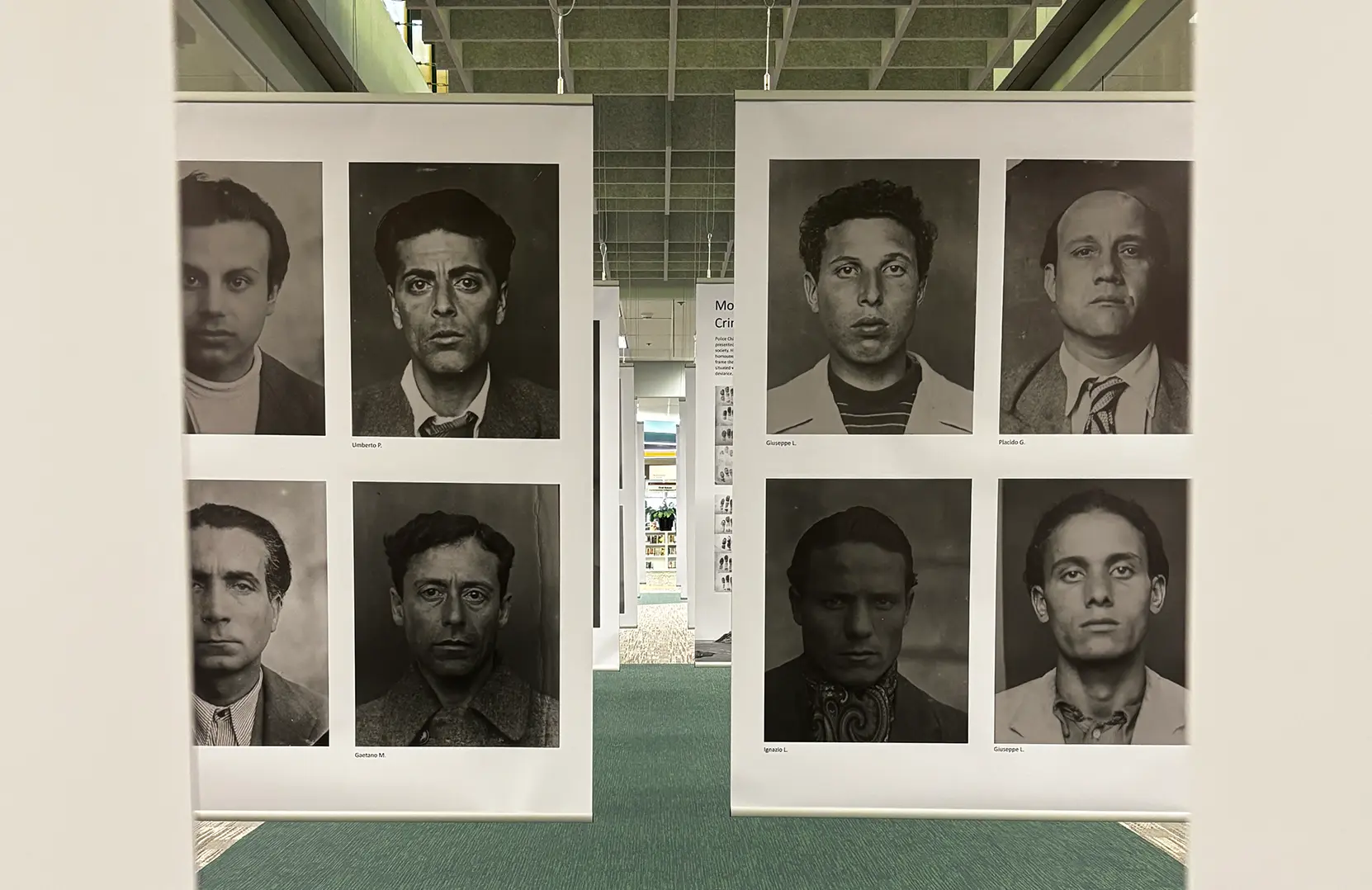
Faces of Exile: The Arrusi and the Policing of Gender and Sexuality art exhibit appears in the John L. Haar Library
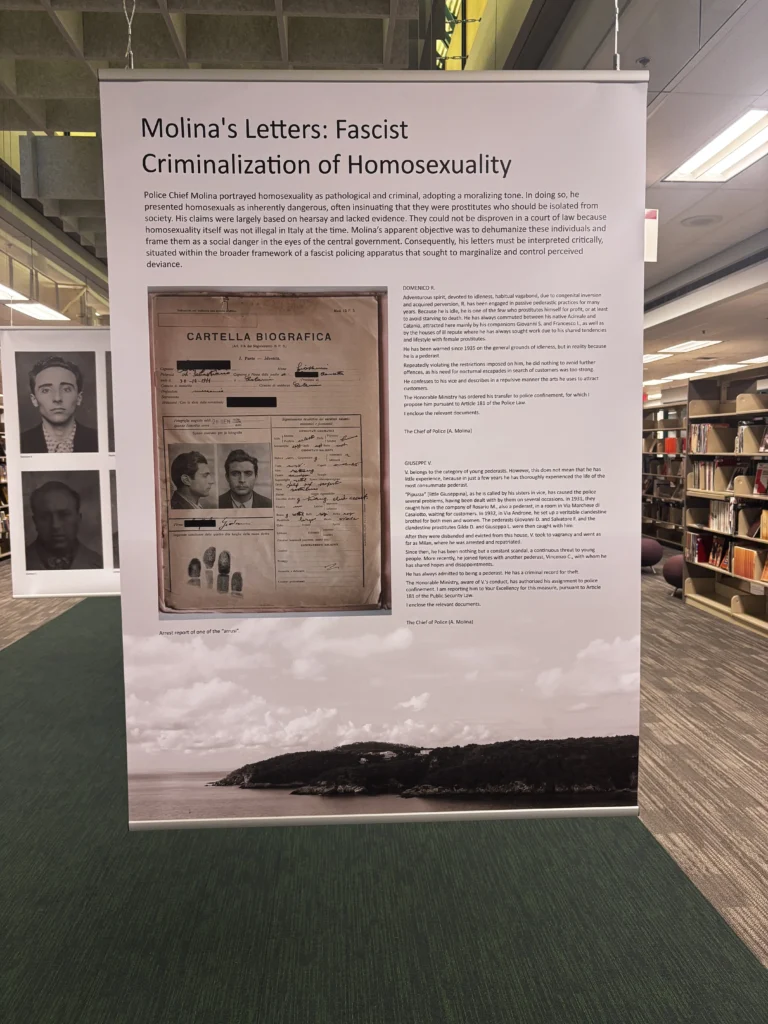
In 1939, 45 men between the ages of 18 and 54 were rounded up in the Italian province of Catania and its surrounding area. They were arrested under charges of “passive pederasty,” which entails a crime against masculinity, morality, and jeopardizing the “Italian race”. They were then subjected to invasive medical exams before being exiled to the island of San Domino.
Fast forward to around three years ago, when Italian photographer Luana Rigolli stumbled across a book containing an interview with one of these men. Intrigued, she reached out to the authors for more information, but was shut down. However, she didn’t let that stop her. Her journey uncovering the atrocities done to LGBTQ+ people under fascist regimes was just beginning.
To commemorate Pride Week, the MacEwan Centre for Sexual and Gender Diversity hosted a series of events, including Faces of Exile: The Arrusi and the Policing of Gender and Sexuality, an exhibition of Rigolli’s work, in the John L. Haar Library. Rigolli has exhibited her work across Italy, as well as at the Italian Cultural Institute of the Consulate in Montreal. Still, MacEwan’s exhibit is unique because it is the first to include letters.
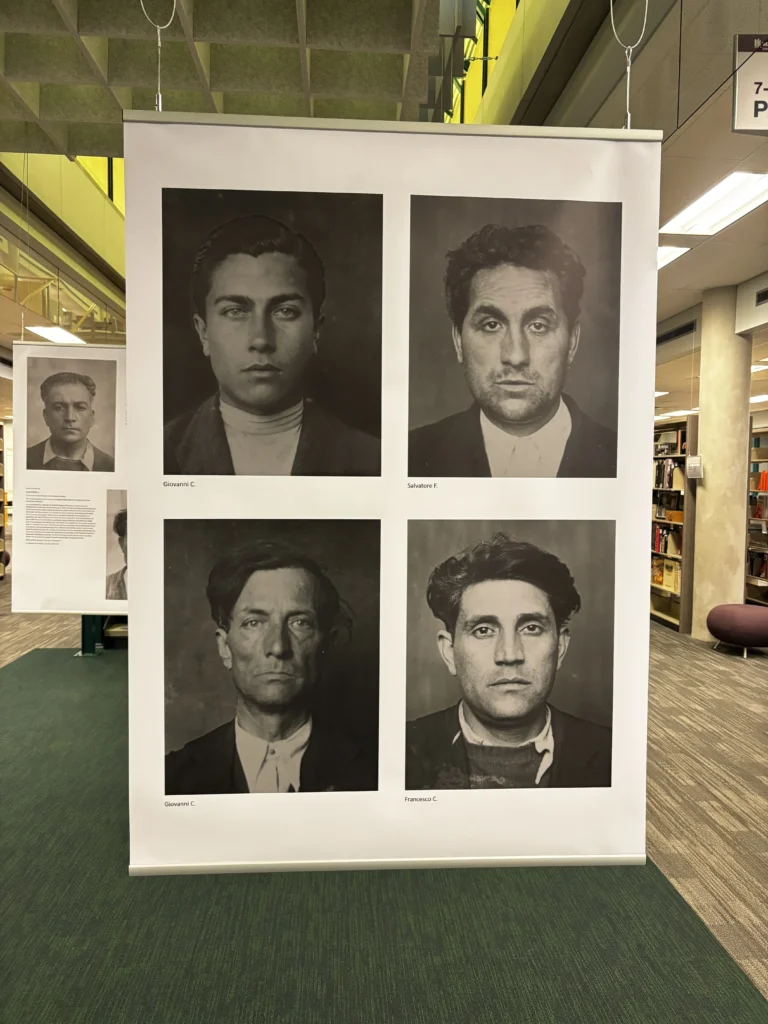
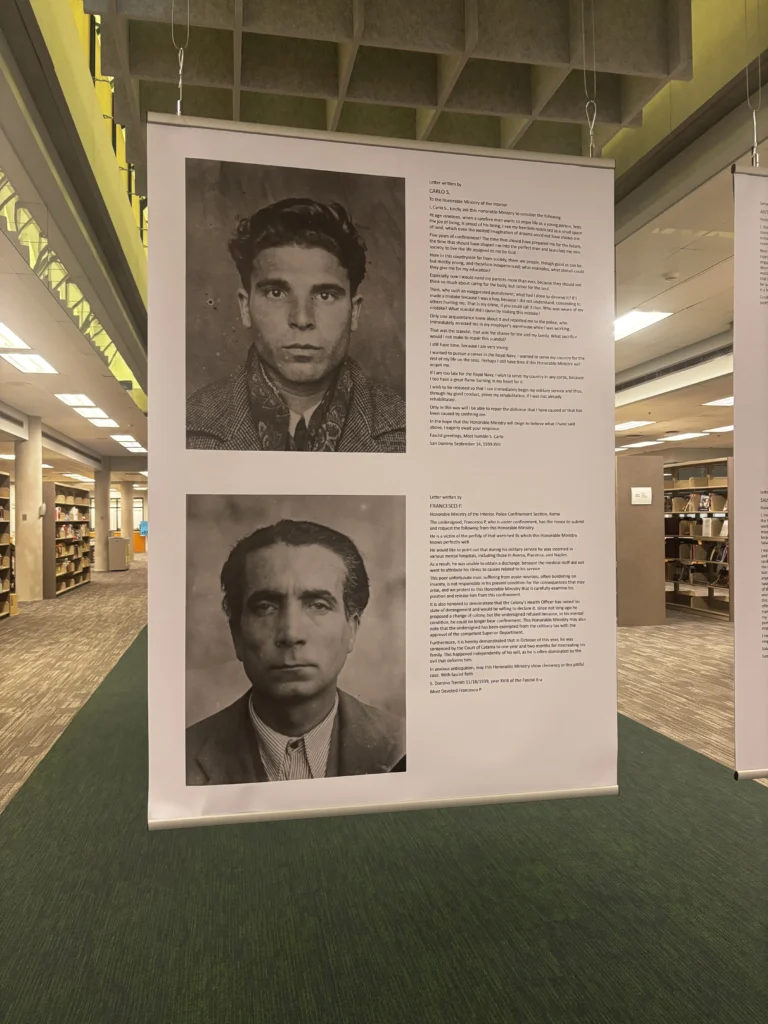
Some letters were written by the men themselves or their families. These letters asked for freedom. They described the men as the sole breadwinners of their families and their departure as catastrophic for the community. Other letters were written by the police. These letters were the opposite, detailing the men as corrupt, evil individuals.
“They were the same age as some of our students. They were forced to abandon their lives. They were forced to leave their families behind. They were forced to quit their jobs. They were isolated on a small island. All because a fascist regime considered them sick.”
— Alessio Ponzio, Director of MacEwan’s Center for Sexual and Gender Diversity
Along with the display, MacEwan hosted an event to celebrate the launch. The panel included Alessio Ponzio, the director of the Centre for Sexual and Gender Diversity, Luana Rigolli, and Jennifer Evans, who is a history professor at Carleton University.
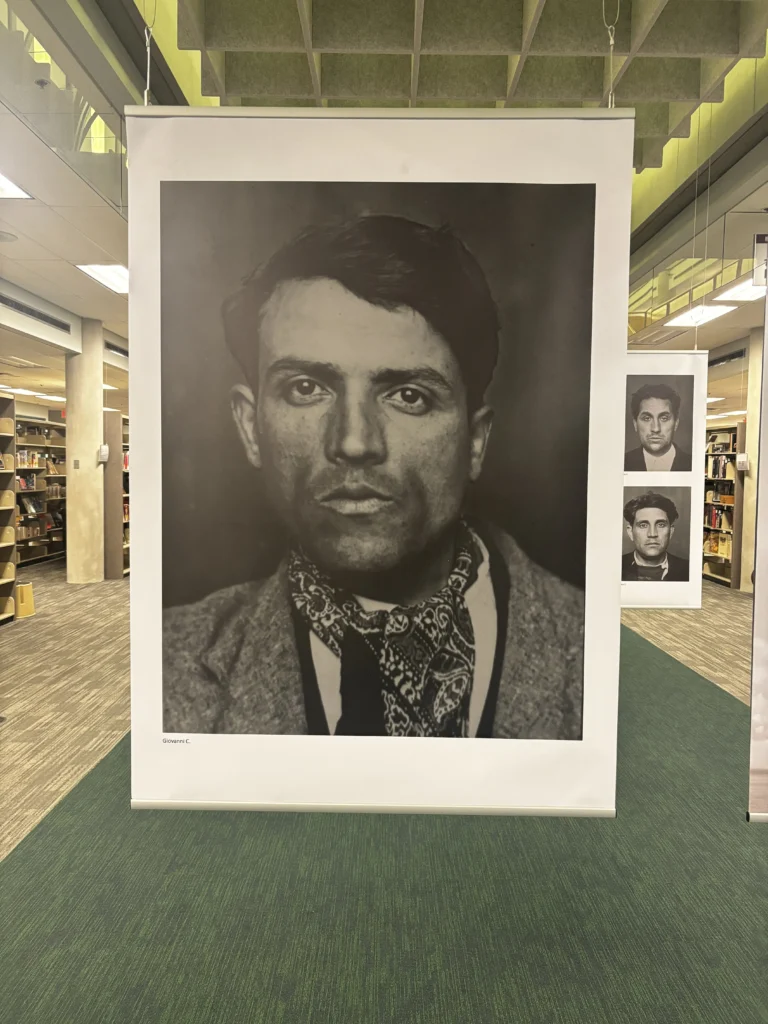
Ponzio played a major role in organizing the exhibit. He says it’s important for viewers to look into the eyes of these “arrusi” so we can match their questioning of our governments and their policies, that he says “discriminate against queer individuals simply for existing.” He wants students to not just look at the images, but to read these men’s stories and connect with them.
“They were the same age as some of our students. They were forced to abandon their lives. They were forced to leave their families behind. They were forced to quit their jobs. They were isolated on a small island. All because a fascist regime considered them sick,” said Ponzio in an email.
Phoebe Paul is a student in the Department of Studio Arts and took on the design aspect of this project. When they signed up, the exhibit was in its early stages. The library knew they wanted to include a gallery space, but it was unknown what it would exactly look like. When asked what drew them to this project, it all came down to the subject matter.
“It’s queer. And I love looking into queer representation.”
Eva Revitt, an associate dean responsible for the library’s operations, took a “chief cook and bottle washer” role in this exhibition. Revitt views libraries as an “interdisciplinary nexus.” For her, the library is a place of discovery, especially the discovery of hidden stories, which makes the space so appropriate for exhibition.
“Exhibitions like these help us to see injustice. We come away realizing how precious life is, and how it needs to be protected at all costs.”
— Jennifer Evans, History Professor at Carleton University
“It makes it the natural place to kind of bring out and discover different ways of knowing, different ways of experiencing, different stories, different paths, and particularly the experiences of people, peoples, that are not in the forefront,” said Revitt.
Jennifer Evans is a history professor at the University of Carleton. She specializes in the history of sexuality and visual culture. She explained that this event highlights how easily these things can happen, “and how susceptible gender and sexual minorities have always been.”
“Exhibitions like these help us to see injustice. We come away realizing how precious life is, and how it needs to be protected at all costs,” said Evans in an email.
“On the one hand, it serves as documents of awfulness, of brutality, of alienation. But they also serve as evidence in support of survivors to have their stories told. To have their experiences and rights recognized,” said Evans at the event panel.
Pride Week at MacEwan ran from March 9-13, and the exhibit will be up until April 5, 2026.

0 Comments
Trackbacks/Pingbacks