Christopher Nolan is one of the most celebrated filmmakers of our modern day. When one of his films hits theatres, it’s less of a release and more like an international cultural event. His movies dominate water-cooler talk, spend weeks on the lips of casual moviegoers and cinephiles alike, and have fans obsessively ranking them among the larger film canon. It’s no surprise that his latest film, an adaptation of Homer’s The Odyssey, has drawn a similar buzz to his last project, Oppenheimer.
The film itself has been mired in controversy since its initial unveiling back in December 2024. Decisions to cast actors such as Lupita Nyong’o and Elliot Page were criticized by right-wing cultural commentators, with many accusing the film of being ‘too woke.’ Other critiques were levelled at the film’s historical accuracy, with much of the conversation centred on period-accurate armour and dialogue in the trailers.
To me, the discourse was mostly an annoyance. It was the usual culture warriors calling everything they didn’t like “woke,” along with many deeming the movie a failure based on screengrabs and single lines of dialogue plucked from trailers. It was a distraction. I won’t pretend that some points didn’t have any validity, as there is something to be said about flattening the very wide and expansive history of ancient Greece down to sandals and mohawked helmets. But I can’t lie, they still look cool. Even though a more accurate depiction of the Bronze Age would have been interesting, I think there were bigger fish to fry.
While I wouldn’t call myself a Nolan fanboy, I have enjoyed much of his past work. I like his historical films, such as Dunkirk and Oppenheimer, where he shines the most, as well as some of his most celebrated fiction films, like Interstellar. At face value, The Odyssey was looking to blend the two, and I was excited to see if and how he would pull it off.
And then of course, there was the spectacle of it.
If there was one thing the marketing of this movie made sure of, it was that you needed to see this in IMAX. This film made history as the first film shot entirely on 70 mm film, introducing many innovations to the large camera system made for the production. The film, in Nolan’s signature style, was shot almost entirely on location, opting to avoid green screens and artificial sets wherever possible. The film’s dedication to practicality extends even further, with a 60-foot-tall puppet on set that would later be enhanced with VFX.
I was lucky enough to see The Odyssey twice, the second time in IMAX projected from 70 mm film, and it was glorious. This is my first experience with true IMAX, and as soon as the preview for Dune: Part Three played, I knew I was in for something special. And it was. The image was incredibly immersive without feeling like a gimmick, and it made the viewing feel grandiose. Lightning strikes felt blinding and made me squint, which wasn’t the case in my non-IMAX screening. I now understand Nolan’s push for this format, and hope to see a wider build-out of IMAX screens.
What about the movie itself? There’s so much talk going on about casting, armour, and aspect ratios, but is it actually a good movie?
On my first viewing, I came out of the theatre conflicted. I thought what I had just seen was good, but it didn’t quite sit right with me. On a scene-to-scene basis, the movie was incredibly engaging. Nolan is a master at presentation, and everything on screen felt huge and incredibly immersive, but for whatever reason, it was less than the sum of its parts.
I spent about a week with this film nagging at the back of my head, never fully leaving me alone, even when I had other things to think about. This movie was like a tick, embedding itself into my skin until I could no longer ignore it. So I did what any sane person would do: Spend thirty dollars on an IMAX ticket.
My 11 p.m. Thursday screening rolled around, and I got comfortable in the squeaky recliner and guffawed at the biggest screen I had ever seen. I turned my critical mind off and prepared to just absorb the movie. The IMAX format really let me get lost inside the movie. Like Odysseus, I had to give myself up to the sea.
I was definitely a little hard on the movie the first time around.
It’s clear that between this film and Oppenheimer, Nolan has been thinking a lot about points of no return. The Trojan Horse is very much the atom bomb of the Bronze Age, and Nolan isn’t shy about that. Odysseus is haunted by his actions in the war, having broken “Zeus’ Law,” which is the rule that guarantees civility among the Greek kingdoms. Odysseus, using a gift to bring war into the streets of Troy, marks the beginning of the Bronze Age collapse, with barbarism replacing the social norms that allowed trade, peace, and even the written word, to flourish. This message, while very powerful and thought-provoking, is a bit clunky in the way it is delivered and built on. Much of the dialogue feels unnatural and coloured by modern archeological findings rather than what these characters would realistically be saying based on the rest of the film’s logic. Lines such as (the now-infamous) “our age of bronze is collapsing” and “because songs will be all they have to remember those of us who could write” delivered by Matt Damon’s Odysseus particularly stand out.
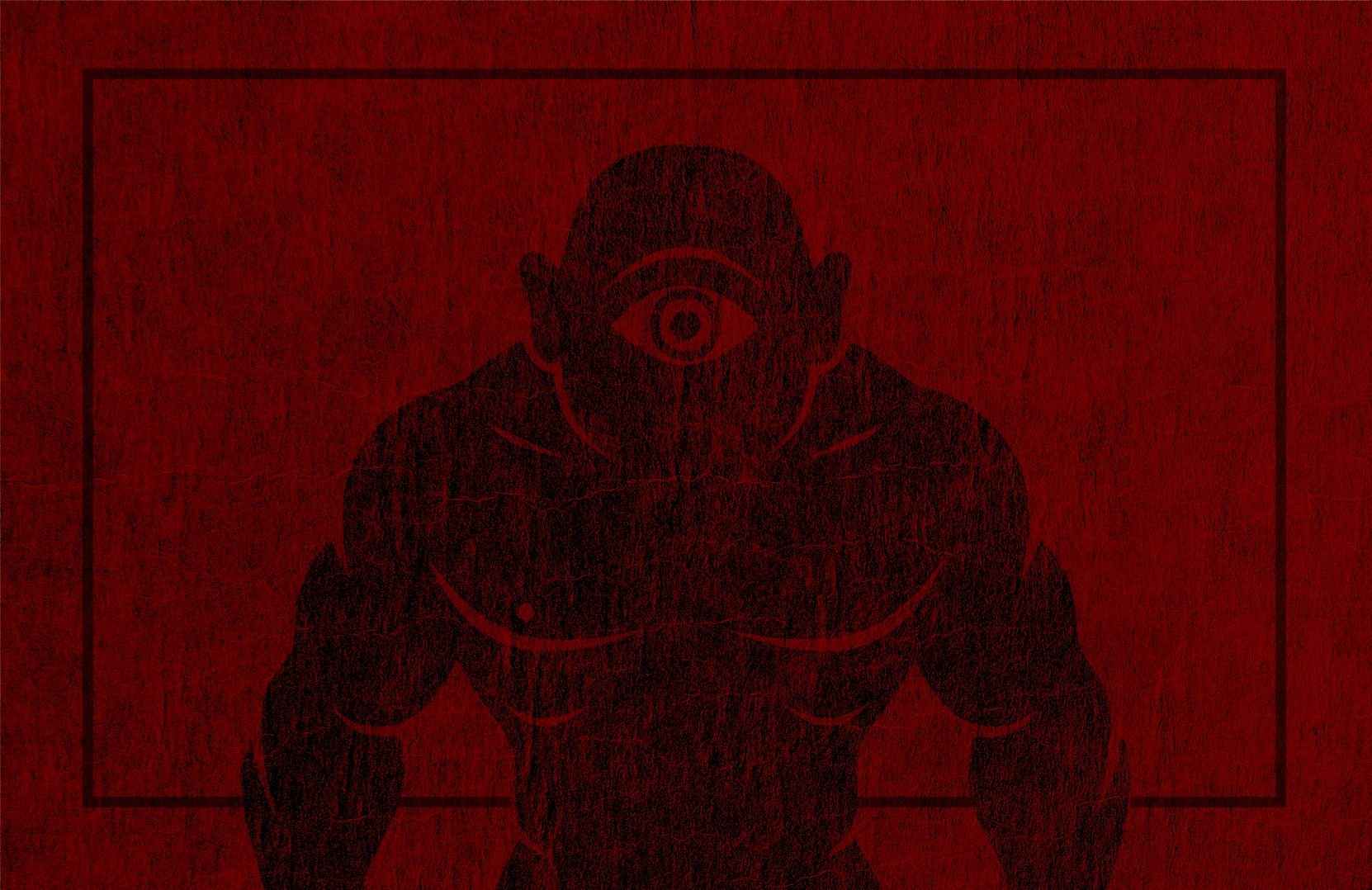
Some of my biggest issues with the movie, when I first watched it, were with the characterization of Odysseus. He sat in a kind of ‘Gentle King’ archetype, where he was thoughtful and chose to do what was best for his family and people, even at the expense of himself. This puts him at odds with the impulsivity we see at certain moments in the film, namely, the shooting of the Cyclops and Odysseus tying himself to the mast of his ship to hear the song of the sirens. This is ultimately forgivable, but his impulsive side could have been explored better.
Worst of all, I think, is the portrayal of some of the female characters. Nolan has always been accused of making ‘boy movies,’ and this certainly doesn’t help. While definitely difficult to justify Penelope never moving on from Odysseus in the twenty years he is absent, there had to have been better ways than having her shout “I want Odysseus!” three times throughout the film. She feels incredibly underbaked and, overall, lacks any real motivations besides her husband. This extends to other female characters as well, such as Calypso. Despite her being a very important character, having trapped and drugged Odysseus on an island with her for seven years, she acts like little more than a way to deliver Odysseus’ character arc by just telling it to him.
At this point, it’s worth noting that between drafts of this review, Emily Wilson released her thoughts on Nolan’s adaptation. Wilson’s 2017 translation of Homer’s The Odyssey was notable for its use of more modern English, and the translation served as inspiration for Nolan’s adaptation of the poem. In her review, Wilson acknowledges that adaptations don’t need to be one-to-one copies of their source material, but also lays out many of the contradictory themes that come with how Nolan chose to adapt the text. It’s a good read, and I agree with a great many of her points, which unfortunately have mostly been turned into clickbait and sensationalized online. I would recommend you check it out, especially her segment about filming on occupied land in Western Sahara.
All in all, I think The Odyssey is a good movie. It can get thematically messy, and doesn’t reach any real emotional depth, but it presents some interesting ideas. Overall, it is a very engaging and entertaining watch. If you’ve been wanting something with a real sense of grandiosity, like the epics of yesteryear, then I think you’ll have a good time.
Also, the preview of Dune: Part Three was so good that it was worth the IMAX ticket alone. You WILL be hearing from me about THAT movie.