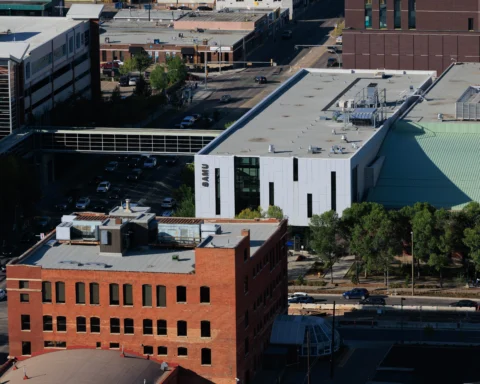
MacEwan University’s board of governors is the institution’s senior governing authority, overseeing major decisions including tuition increases, institutional budgets, presidential appointments, and long-term priorities.
Established under Alberta’s Post-secondary Learning Act, the board is responsible for governing the university as per institutional interests and is accountable to Alberta’s minister of advanced education and, ultimately, the public.
According to the board bylaws, members of the public can attend open sessions as observers, subject to space limitations and standards of conduct determined by the chair. Observers cannot address the board unless invited by the chair and are prohibited from recording or broadcasting proceedings.
Board meetings can be open, closed, or in-camera. Closed sessions are used for confidential matters, while in-camera sessions have no agenda or minutes and cannot be used to make formal decisions. The chair of the board may remove visitors following a disturbance or breach of meeting rules.
In a statement to the Griff, the university said members of the public can request a link to attend via the board’s website. All observers now attend through Microsoft Teams to “allow for the maximum number of observers,” a change the board said was made several years ago.
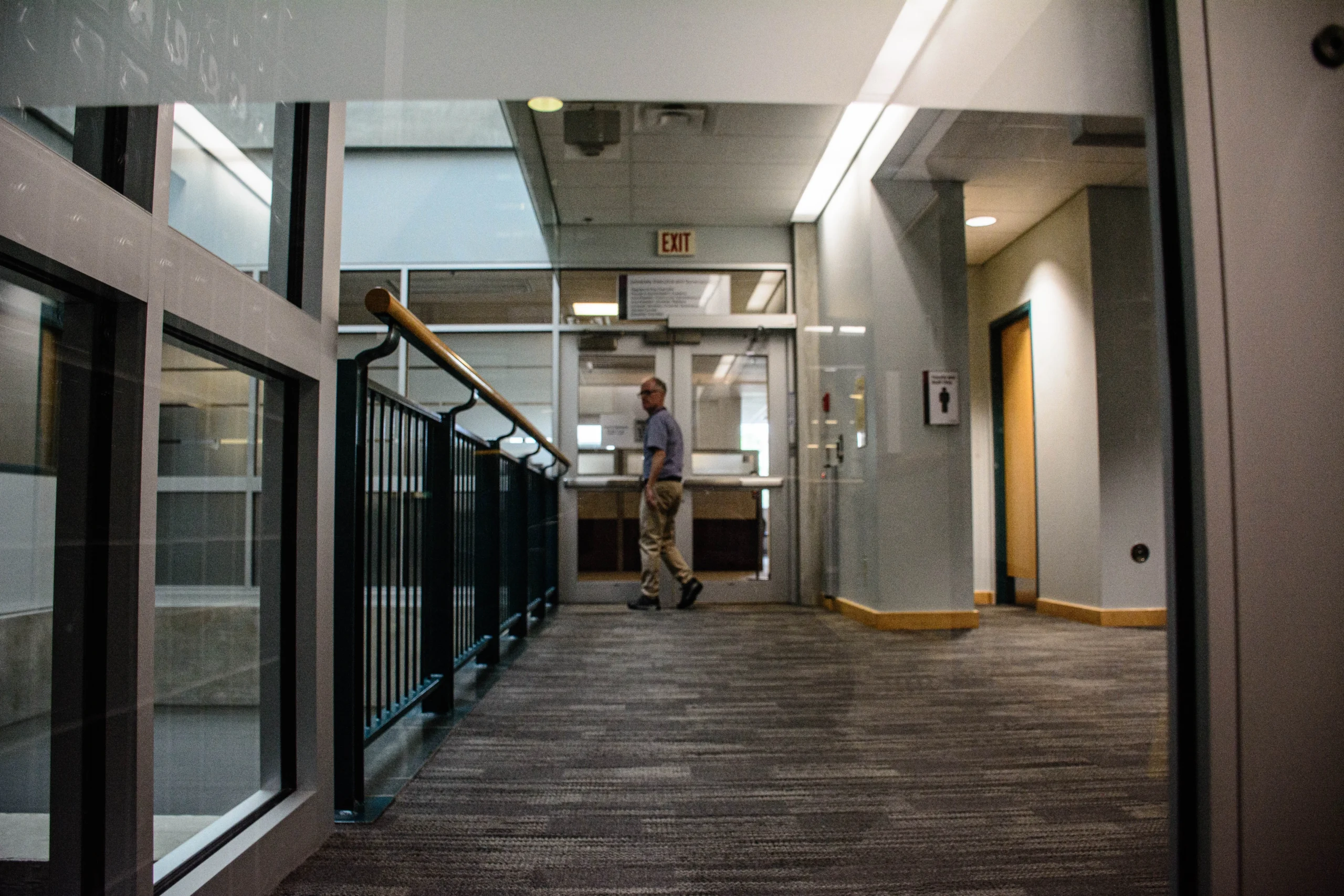
The university did not respond to the Griff’s questions about what prompted the shift away from in-person observations, whether past protests factored into that decision, or whether in-person access will return. It also did not address questions about why the university installed controlled-access doors and frosted windows around governance offices.
Board records show that its meeting format has moved between in-person and virtual sessions in recent years. Meetings in October and December of 2023 and March 2024 were held on campus, while a May 2024 financial meeting was held via Teams. The June 13, 2024, meeting was listed in room 7-218.
Nour Salhi, a member of the Palestinian Student Alliance (PSA), told the Griff that students first mobilized around the same June 13 meeting. According to Salhi, students gathered to seek a response from the university, offering to leave if an administrator spoke with them. Salhi alleged that the administration declined, and the board subsequently moved online. Publicly posted minutes identify room 7-218 as the meeting location but do not mention the demonstration or a move online.
The board later returned to in-person meetings in October and December 2024 and March 2025.
PSA members gathered outside the board’s meeting area again in December. Salhi alleged board members were moved between rooms while students protested nearby. The minutes do not reference the demonstration.
Salhi also alleged that access around governance offices became more restricted following the demonstrations. She said a door installed after the June protest was later changed to authorized access only following the December demonstration, and windows near the meeting area were later frosted. At the time of writing, The Griff has observed controlled-access doors and frosted windows in the area, but could not independently establish when or why those changes were made.
For Salhi, technical compliance with the rules does not necessarily translate into meaningful access. She explained that information about the board is “scattered” across different locations online, making it harder for students to know where to look for information or how to engage with meetings.
“You never feel fully informed, and maybe this dissuades your willingness to engage with them.”
– Nour Salhi, PSA member.
The board’s accessibility is particularly relevant when it makes decisions with direct consequences for students. In December of 2025, the board approved its annual review of tuition and mandatory non-instructional fees for the 2026/27 academic year, despite opposition from executive committee members Nathan N. Poon (president) and Andrei Santiago (governance & finance). The minutes also record concerns about affordability and financial hardship.
Official minutes are not released immediately. Under the bylaws, open-session minutes must be approved at a subsequent meeting before being posted publicly.
Salhi said the PSA has questioned whether the public record adequately reflects meetings affected by demonstrations.
“I don’t see anything mentioned whenever I read through them,” said Salhi, in reference to the demonstrations in the minutes.
“How open are these meeting minutes in the first place? What else are they keeping off?”
Questions about transparency at MacEwan have also emerged alongside broader scrutiny of Canadian universities’ responses to pro-Palestinian demonstrations.
A July investigation by The Breach reported that university emergency managers participated in national and Alberta networks used to share information about pro-Palestinian protests and encampments in 2024. According to the investigation, MacEwan hosted and administered the Alberta network, which reportedly circulated information from social media monitoring, police risk assessments, and other institutions.
At MacEwan, the PSA has repeatedly protested the university’s use of Ex Libris library software and called for greater disclosure about the institution’s connections to Israel.
The board’s own bylaws state that members are responsible for promoting openness and awareness of board operations within the university community.
While the board’s current practices remain compliant with its bylaws, the shift to online observation, restricted access around governance offices, and the inherent delays in publishing approved minutes, leave a gap between the board’s work and the students affected by its decisions. As the board continues to make decisions on tuition, university finances, and MacEwan’s long-term direction, questions about what meaningful public access to the university’s highest governing body remain.