Five MacEwan professors across various departments received grants from the Natural Sciences and Engineering Research Council of Canada (NSERC) for projects ranging from AI in supply chain management to pathogens in canola plants.
The grants will support the development of the recipients’ research and promote student involvement. Four of the five grants are five-year terms; the fifth is a two-year term.
The recipients have involved students, interns, and other schools in their research and are amplifying research opportunities at MacEwan.
Dr. Chris Ramsey
“The self-adjoint content of non-self-adjoint operator algebras”
If all you can see are the shadows of an object, how much can you really know about the object itself?
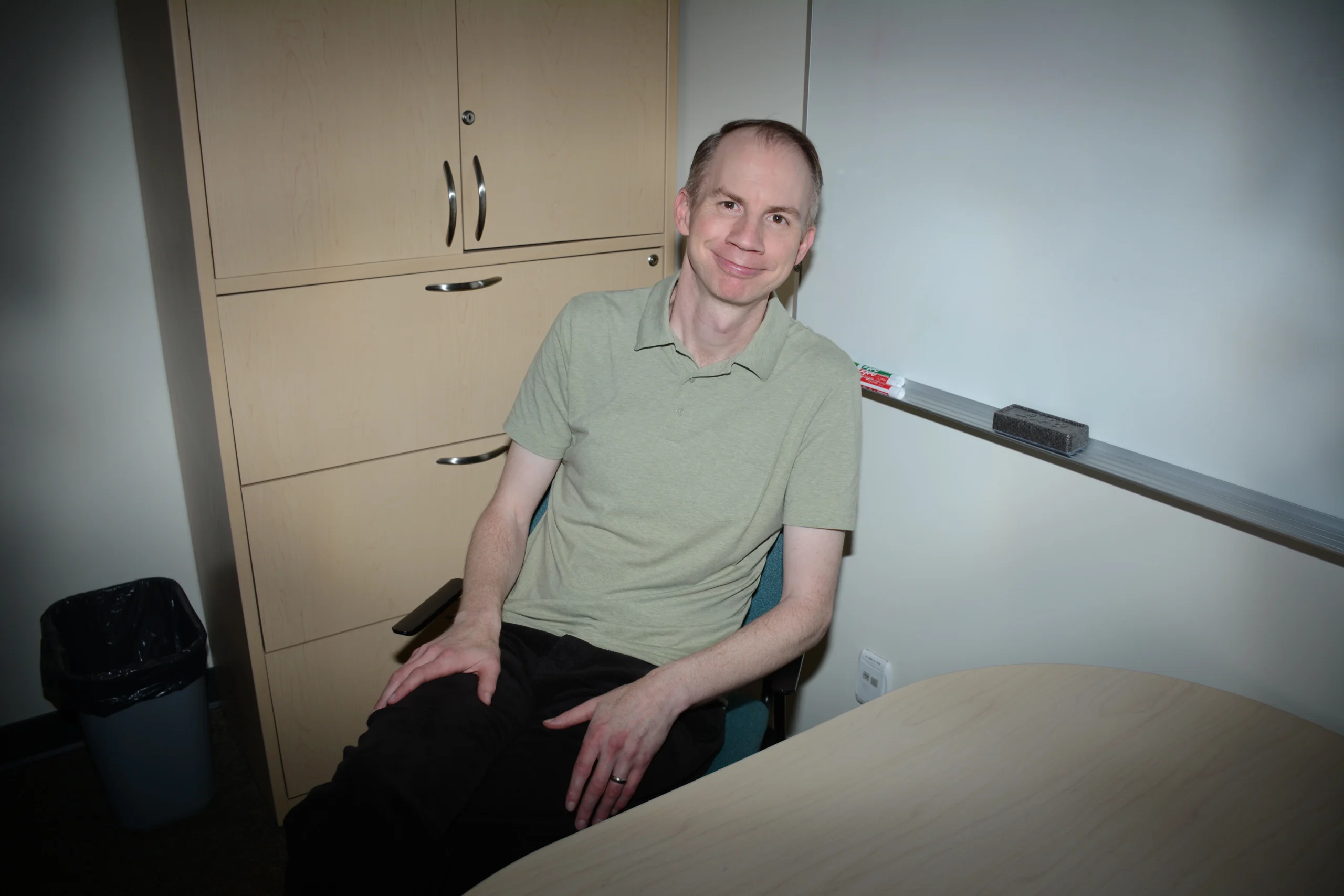
This is the question that Dr. Chris Ramsey, associate professor and chair of the MacEwan department of mathematics and statistics, intends to answer through his research in pure mathematics.
Sitting in his office, Ramsey holds a whiteboard eraser above a table, shines a flashlight over it, and points to the shadows cast on the table. As he moves the eraser around, the shadows change, but the integrity of the object itself doesn’t.
The study of abstract mathematical structures, or pure mathematics, is what Ramsey has committed his career to understanding. Instead of looking at objects directly, Ramsey looks at different ways they can be represented — or the many different ‘shadows’ they project.
His project examines what information is lost when an object is absent, using only its shadow. Which different shapes could have created the shadows? Which shadows are the same? Which ones are different? These questions shape Ramsey’s research, for which he now has $170,000 from NSERC to answer.
With his newfound grant, Ramsey intends to invest in the people he works with. “Math is really cheap,” he says. “My money is going largely into hiring and helping me travel to my collaborators around the world and bring them here as well.”
Pure mathematics, since it lives in the theoretical, doesn’t seem to serve much utility to the average person. However, Ramsey finds his passion for the subject through the “intrinsic satisfaction of solving problems.”
“Life’s much more worth living if you don’t kind of try to be too reductionist…there’s so much beauty to be explored.”
— Dr. Chris Ramsey, associate professor and chair of the Department of Mathematics and Statistics
Dr. Andrea Botero
“Mechanisms driving virulence evolution and population variability in Plasmodiophora brassicae”
Canola plants are a major agricultural pillar in Alberta and contribute billions of dollars in annual revenue to the province. Plasmodiophora brassicae, a microorganism that causes clubroot disease in canola plants, is a devastating pathogen for canola farmers.
The pathogen remains in soil for 20 years, causes tumour-like galls to form on canola plants, renders them incapable of absorbing nutrients, and ultimately kills them.
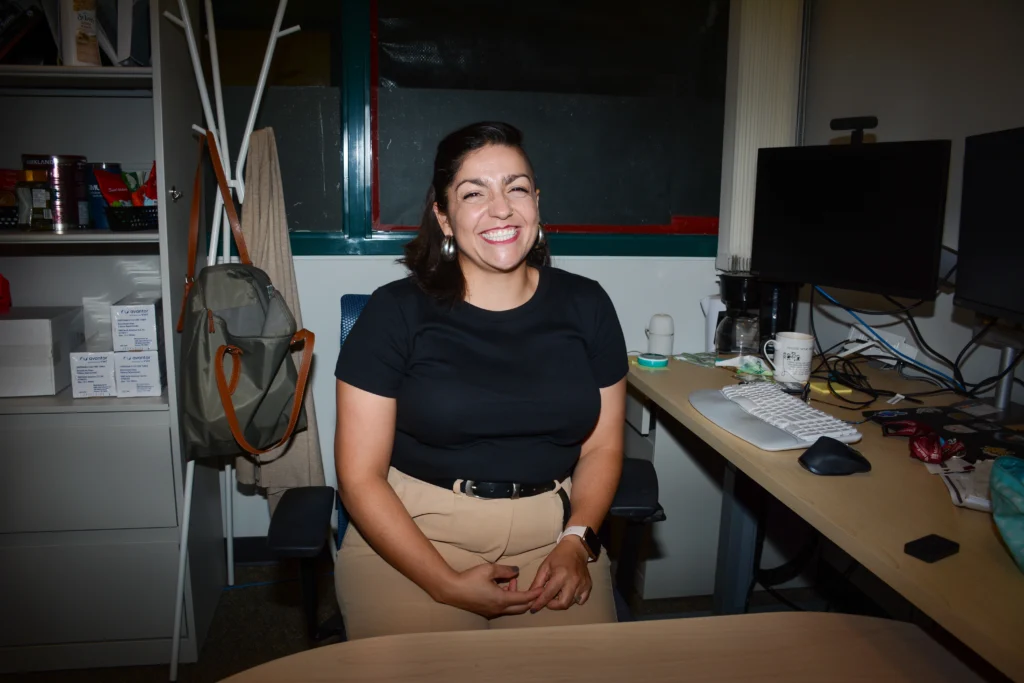
Dr. Andrea Botero, an assistant professor in the department of biological sciences, has poured 15 years of research into helping farmers manage this pathogen. She received $202,500 from NSERC to support her work.
Plasmodiophora brassicae exists in different forms, and each of them can cause different levels of disease in different kinds of canola. Earlier in her research, Botero developed a yield-loss model to help farmers estimate losses based on disease levels in their crops. Botero says this is her biggest accomplishment in helping farmers.
Her most significant research contribution is the development of a technique that uses microdissection to isolate a single spore for more precise study.
Prior to Botero’s technique, researchers would usually study large groups of spores due to how difficult and tedious it was to isolate an individual, microscopic spore. The new method allows researchers to more efficiently create single-spore isolates and study individual forms of the pathogen.
Using her NSERC grant earnings, Botero intends to continue her research by examining multiple strains of clubroot disease on a single canola plant. She says it’s similar to the COVID-19 analogy — if a person has both COVID-19 and the flu, are they extremely sick because of the more abundantly present one of these viruses, or just the combination of being infected by both? Botero intends to find out by inspecting the DNA and RNA of infected canola plants.
This research uniquely includes a collaboration between MacEwan undergraduate students and University of Alberta graduate students.
“I think this is a big opportunity for me,” says Botero, on the topic of receiving her grant. “This is a big opportunity for MacEwan to open new opportunities for our students, [and] to get into agriculture and biology from the applied perspective, which I think is big in a province like Alberta.”
“This is a big opportunity for MacEwan to open new opportunities for our students.”
— Dr. Andrea Botero, assistant professor, Department of Biological Sciences
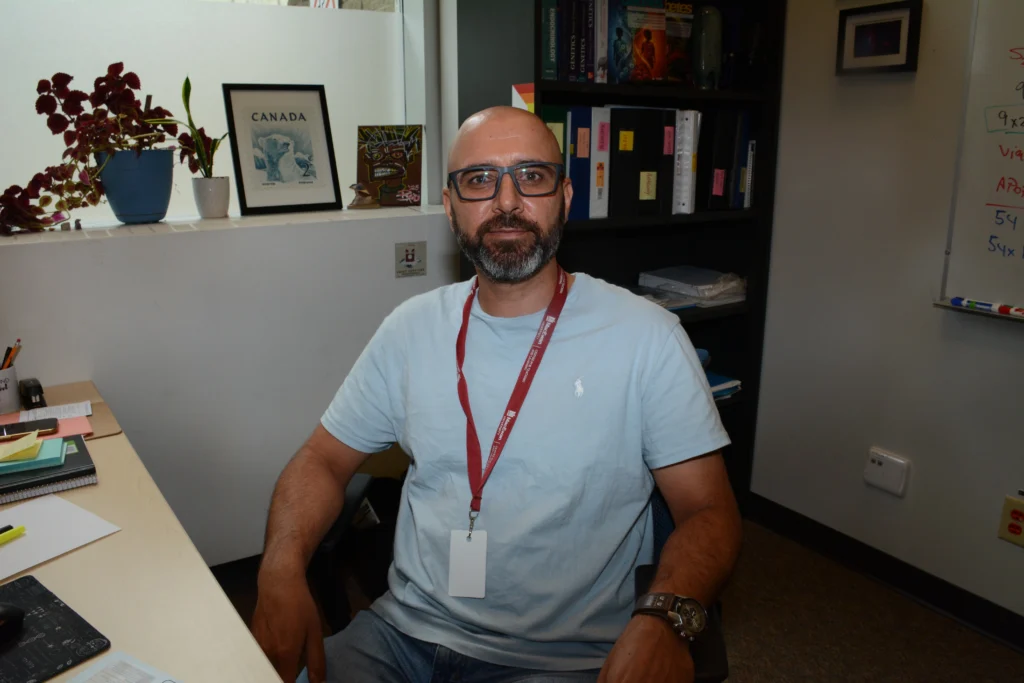
Dr. Habib Rezanejad
“Studying the mechanisms of pancreatic ductal cell response to injury and crosstalk with pancreatic islets using human ductal organoids”
Type 3C diabetes, a largely lesser-known and under-researched form of diabetes in comparison to Types 1 and 2, occurs when damage to the pancreas causes further damage to insulin-producing beta cells. Patients are often misdiagnosed with other types of diabetes because of the lack of research, which ultimately impacts their ability to get proper treatment.
Dr. Habib Rezanejad, an assistant professor in the department of biological sciences, has been working with tiny, lab-grown pancreatic models known as organoids to better understand Type 3C diabetes and develop more effective treatment options for patients.
Uniquely, the pancreas functions as both an exocrine and endocrine gland. The exocrine system uses digestive enzymes to break down food, while the endocrine system releases hormones like insulin into the bloodstream. Rezanejad is examining the communication between these two systems to better understand pancreatic damage.
Rezanejad has been working in diabetes research for about 15 years and collaborates with Harvard University and the University of Alberta. Within his Type 3C diabetes research, he exposes the organoids to various “injury models” to see how damage spreads through the pancreas and ultimately affects insulin-producing beta cells. A common cause that Rezanejad often examines is inflammation.
‘’I think my research provides, hopefully, better treatment for patients, [and] at the same time, will provide outstanding opportunities for students,” says Rezanejad.
On campus, Rezanejad describes his work as heavily student-focused. He currently works with eight students who are either in honours programs or are enrolled in research-based courses.
“I think students need to know more about these research opportunities and get in touch with the professors too if they are interested in gaining some experience in lab and hands-on research,” he says.
Dr. Dana Cobzas
“Deep shape representations for encoding and interpreting anatomical variability in neuroimaging”
Amyotrophic lateral sclerosis (ALS) is a disease that damages nerve cells in the brain and spinal cord, leading to muscle weakness and twitching throughout the body due to loss of voluntary movement control. Currently, there is no cure for this fatal disease.
A great challenge in medicine today is understanding how diseases like ALS affect the brain, especially when symptoms vary from patient to patient. That is why Dr. Dana Cobzas, an associate professor in the department of computer science, is researching and developing deep learning models in collaboration with the University of Alberta’s department of neurology. It’s an intricate multilayer model that mimics a human brain to simulate ALS symptoms.
Cobzas’s work analyzes 3D mesh models of the brain composed of connected triangles, enabling her model to detect subtle shape changes that the human eye would otherwise miss.
ALS symptoms vary. This is why researchers like Cobzas are trying to identify which symptoms and changes are unique to certain patients, and which are overarching side effects that affect most patients with ALS.
Cobzas has been working in brain shape modelling, including this project, for 20 years and has just received her third NSERC grant during her time at the University of Alberta and MacEwan. Her research has ranged from Parkinson’s disease to multiple sclerosis (MS).
“I think it’s definitely much harder for [MacEwan] to get those grants than people at the U of A because our research is not at the scale that they do their research,” says Cobzas. “I’m really excited to do this work.”
With her most recent NSERC grant, Cobzas intends to develop a model of a normal brain and work towards publishing more of her research. She currently works with two graduate students at the University of Alberta and several undergraduate research assistants at MacEwan. Cobzas says she will continue recruiting MacEwan students to work on this project over the next few years.
Dr. Parminder Singh Kang
“AI-driven modelling of resilient supply chains: Integrating people, processes, and Technology”
Disruptions to supply chains today range from post-pandemic challenges to rising tariff costs, both of which have become unavoidable for Canadian businesses. Dr. Parminder Singh Kang, an associate professor in the department of decision sciences, has been developing an AI-powered “digital twins” system to build resilient and sustainable supply chains.
Digital twins are artificial copies of a supply chain, allowing managers to test “what-if” scenarios to see how decisions would affect their company.
“We want to make those decisions using more AI models or machine-learning-based models,” says Kang. “Because, simply, these models can take in a lot more data when it comes to decision-making.”
However, Kang’s research is not entirely focused on developing AI tools. While building resilient supply-chain models is essential for businesses today, so is maintaining sustainable practices. Kang is researching how supply chain managers can use the digital twin model to solve multi-objective sustainability problems.
“You can look into reducing carbon emissions [or] radiocarbon footprints, [but] sometimes these objectives, they are really conflicting, so usually your cost will increase as you’re trying to bring in sustainable practices,” he says. “So the idea is, okay, can we have a multi-objective problem that you can solve using AI?”
Since these issues are often complex, having human ideas in the loop of the decision-making process is essential, an element that Kang has uniquely prioritized through his research and considers the second stream of the project.
Kang is gathering data on supply chain jobs across North America to understand the most prevalent skill sets in the field to keep humans in the loop of the decision-making process.
Currently, Kang works with four PhD students from other international universities who now work under his supervision at MacEwan. Moving forward with his newfound $202,500 in NSERC funding, Kang intends to expand project collaborations and potentially bring in postdoctoral researchers.