
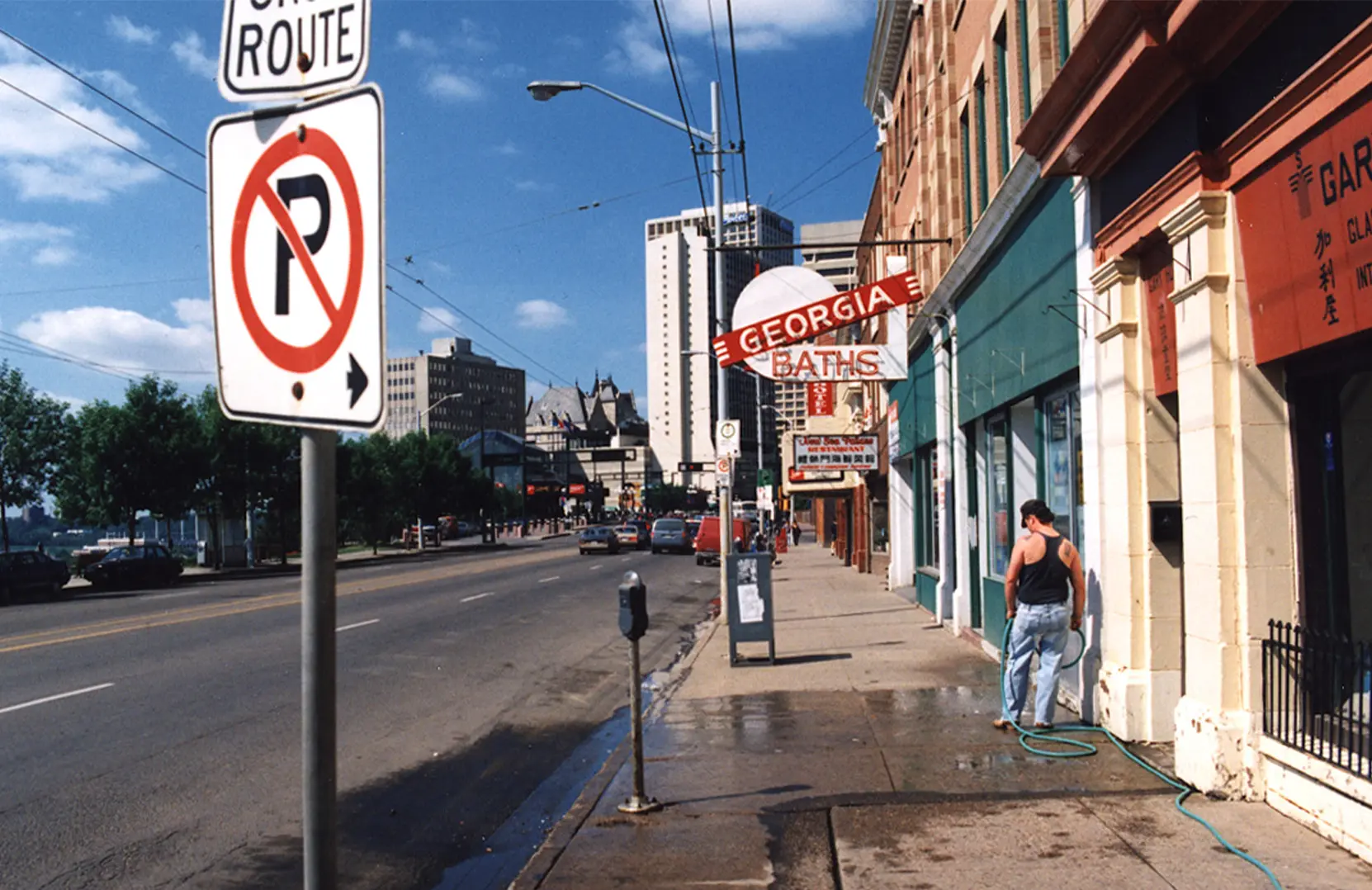
Georgia Baths in the 1980s, Photo provided by the city of Edmonton
How the infamous museum displays how Edmonton’s downtown culture came to be.
Bright neon signs that once hung in front of original Edmonton businesses now light up downtown on 104 Street.
David Johnston, the principal heritage planner for the City of Edmonton and the program manager of the museum, says the attraction was created during a time when Jasper Ave was struggling, and they saw great potential in 104 Street. The city was conducting a series of revitalizing efforts to the street, and with the historical buildings that call that area home, it was the perfect place to add the signs.
Over time, the museum’s purpose shifted from downtown revitalization to a major Edmonton tourist attraction and a window into how Edmonton’s culture has been defined throughout the years.
Every sign hung tells a unique story, but three stand out as vital to the development of present-day Edmonton.
Georgia Baths
Bathhouses were an integral part of Edmonton’s culture in the early 20th century, amidst immigration booms and shifting cultural values. Among them was Georgia Baths, which became immortalized as the city’s longest-running bathhouse.
Initially named Edmonton Turkish Baths, Georgia Baths opened as a genuine Turkish bathhouse and became a familiar sight for European immigrants accustomed to baths as part of their culture back home. As time passed, however, Georgia Baths became an important social hub.
In an interview in 1991, Ed Bordian, a former owner of Georgia Baths, said that much of the clientele would “sit around in the steam room, play cards, spend the whole day [there].” The demographic had variation, but was described as “mainly middle-class men in their 20s and 30s.” The vital part of this demographic, however, is that a majority of them were gay.
Bathhouses began to pop up throughout Edmonton in the latter half of the 20th century, and were more obviously advertised as queer spaces. Georgia Baths was also a dominant queer space, but had “always been kind of chugging along under the radar,” according to former Georgia Baths employee and Edmonton Queer History Project Board member, Rob Browatzke. “The people that went there, that was probably their only connection to other gay men.”
The significance of bathhouses in queer culture was apparent and became quite public. However, this publicity also drew unwanted attention to bathhouses. “There is an uproar of comments that undermine the dignity of gay men by utilizing the bathhouse as evidence for the abnormality of gay culture,” wrote R. P. Campbell for the Edmonton Journal in 1998.
In 1981, Pisces Bathhouse was raided by police, leading to the arrest of 56 men. This event was part of a larger chain of LGBTQ+ harassment across Canada, and other bathhouses in Edmonton began to shut down. Instead of risking being raided, Georgia Baths never publicly advertised itself as a queer space, allowing “people in the know” to feel secure there.
Georgia Baths closed in 2005 after briefly rebranding as Steamers. Near the end of the bathhouse’s legacy, Georgia Baths became “grungier” and ultimately became a health hazard. The last reports from the city about Georgia Baths were from health inspectors, but the true history of the space lies in the connection it provided for so many people for so many years.
In a time before gay bars and the decriminalization of homosexuality, Georgia Baths stood as a haven.
Mike’s News
In 1912, John “Mike” Michaels travelled from New York City to Edmonton and began selling newspapers on the back of a horse.
Despite the harsh Edmonton winters, Michaels ran his newsstand from the back of a wagon for two years before purchasing the spot on Jasper Ave where his store would remain for the next 64 years. In Michael’s new spot, his business grew past a typical newsstand. Here, people could send smokes and periodicals to the front lines of the First World War. He started a band to keep his newsboys out of trouble. He opened the first dinner for homeless veterans. Mike’s News fostered a strong sense of community in the heart of the growing city.
When people immigrated to Edmonton, newspapers and magazines were essential to keep them in touch with their homelands. Mike’s News ordered papers from all over the world so its readers could stay up to date on current events back home.
Grant Ainsley was fourteen when he lived near Commonwealth Stadium and hopped on a downtown bus twice a week. One of the spots he would always visit was Mike’s.
“It was just a magical place for me. I still remember what it looked like.”
Ainsley remembers everything from the weekly papers on the right wall to the cubbies that held people’s orders from around the globe on the left. He would walk past the offices to the back, where the ticket office was located. The pungent smell of tobacco clung to him the whole time.
Ainsley had a unique stance with Mike’s. He was a customer who worked there for a period of time, and was sitting at the Edmonton City Council when the construction of Scotia Place was passed, and Mike’s was closed. He felt the community firsthand, seeing “the relationship between the people who went there on a regular basis to buy the newspapers or magazines, and the staff of Mike’s.” This kind of community is rare in our city today, as the internet has led us to lose the face-to-face connection you get when you shop in a store.
After Michaels’ death in 1962, the newsstand stood in its spot for another 17 years before moving locations in 1979 and eventually shutting down in 1986. Michael’s widow, Ruth Michaels, was asked what she thinks allowed Mike’s News to stay open as long as it did. She attributes the success to the sense of community.
“Johnny knew practically everyone personally.”
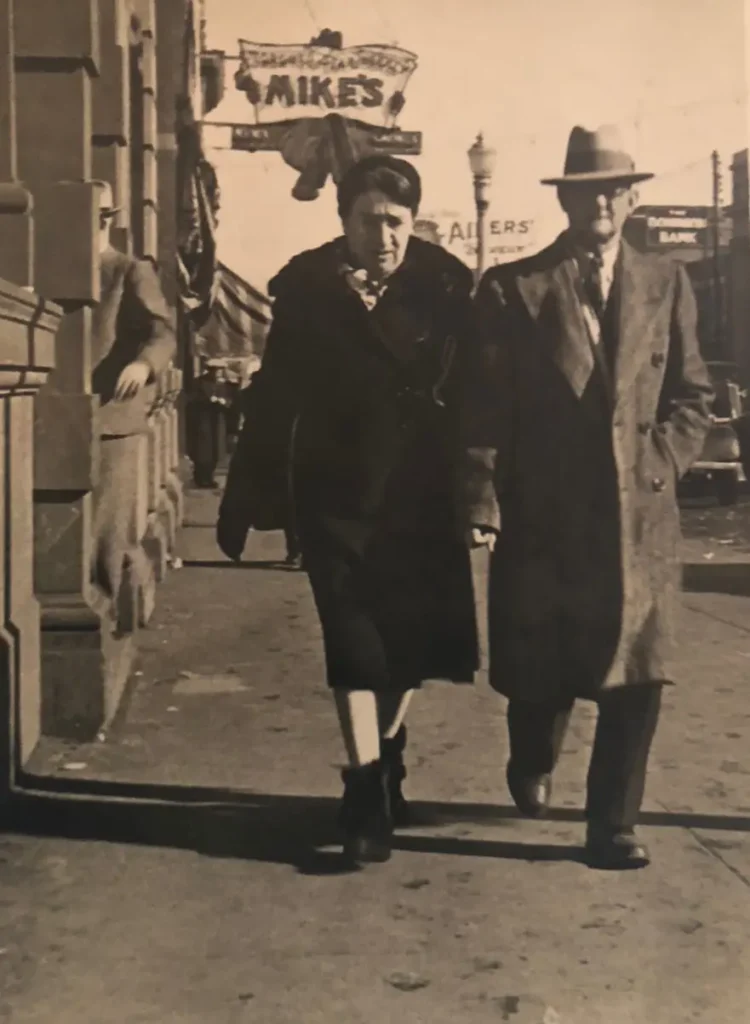
“It was just a magical place for me. I still remember what it looked like.”
— Grant Ainsley, former Mike’s News customer and employee
Pantages Theatre
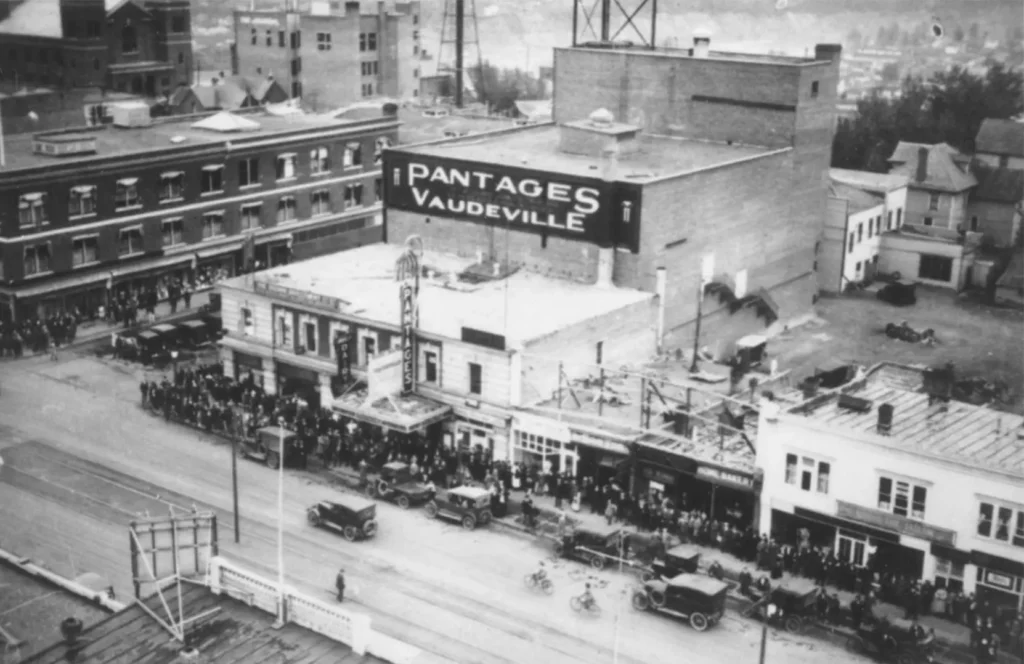
In 1913, the Pantages Theatre was opened by George Brown and Greek immigrant Alexander Pantages as Edmonton’s largest theatre and a branch of the largest privately-owned vaudeville circuit in North America.
The theatre opened as a vaudeville hotspot and continued to run vaudeville shows longer than any other theatre. The theatre’s opening night sparked the buzz that would surround it for the next 16 years.
Opening night was May 12, 1913. The crowd was described as having “spilled onto the sidewalk and street,” as the eager audience waited through a 45-minute delay for the theatre doors to open. The architecture was “a partial Greek adaptation, but mostly of the Italian Renaissance period.” Delicate carvings, plaster relief work, and dome ceiling lights surrounded stunned audiences. The theatre glimmered anew, and its impact was forever solidified.
Pantages immigrated from Greece in the height of the Klondike Gold Rush in hopes of opening a theatre of his own. Eventually, Pantages controlled 70 theatres worldwide, including locations in Hollywood.
This is, perhaps, the closest Edmonton ever got to being related to Hollywood.
The Pantages Theatre operated for 16 years, during which its popularity declined as motion pictures rose in popularity, before ultimately shutting its doors in 1929. Eric Baker, in a 1975 interview, remembers running the last show to “practically an empty house,” as popular culture inevitably shifted its focus to films.
The theatre was reopened as “The Strand” in 1931, and was used primarily as a movie theatre. The Strand went on to host productions by Edmonton Little Theatre, became a local queer space, and carried on Edmonton’s legacy as a theatre city.
David Johnston and the city plan to vastly expand the museum in the future, and they are always looking for new signs. As the current wall fills up, they are always scouting for new locations throughout downtown.
Originally published on March 1, 2026.
0 Comments